
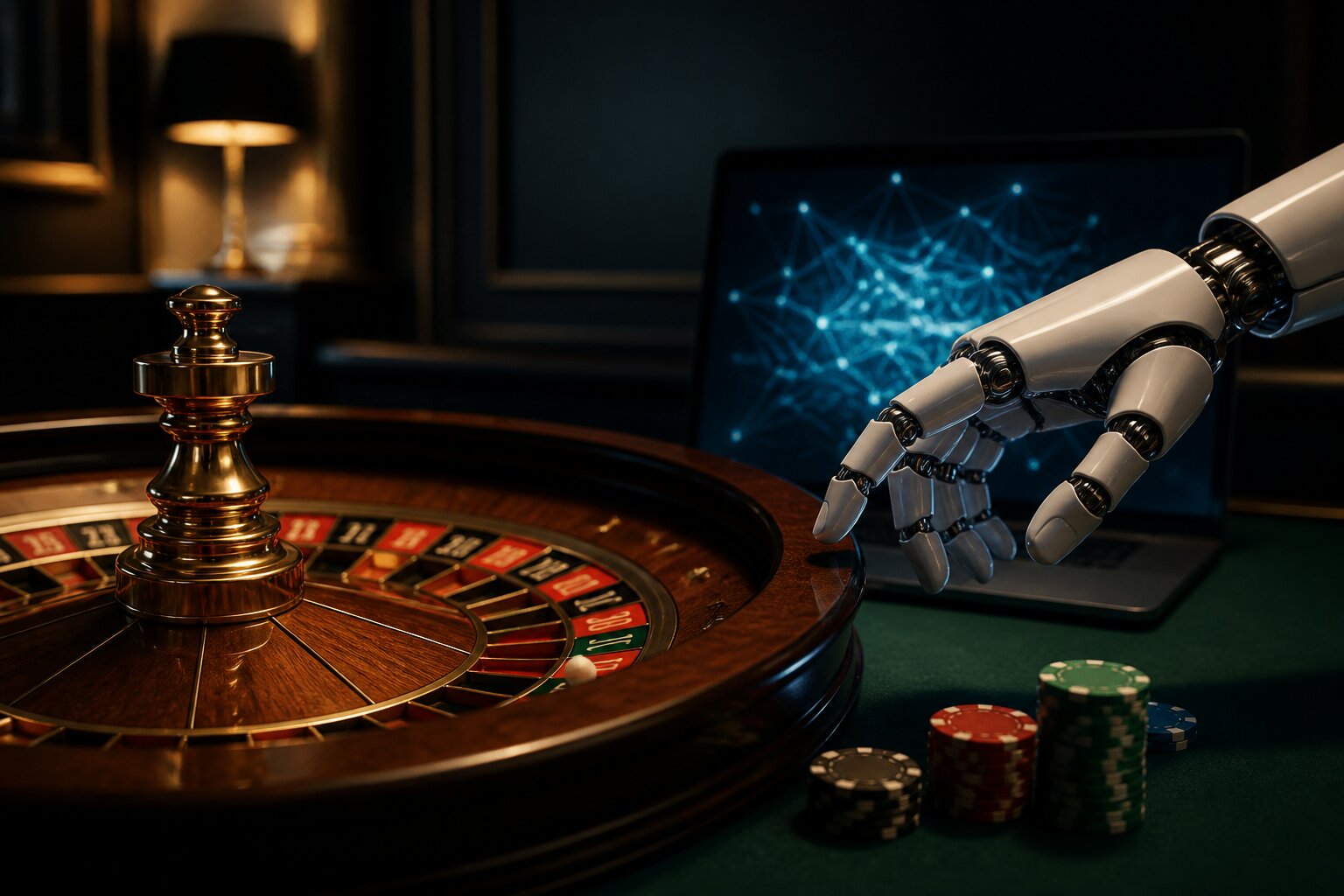
The internet is full of bold claims from so-called “AI roulette predictors” and machine learning bots. Advertisements promise they can spot patterns, exploit biased wheels, or guarantee wins — but headlines and marketing language can be misleading.
This article separates fact from fiction. It examines how these systems are described, how roulette actually works, and what machine learning can and cannot do in this context.
Read on to see why these promises rarely match reality and what to watch for if you encounter them.
How Do AI Bots Claim to Predict Roulette Outcomes?
Marketing for AI roulette tools often uses technical language to make systems sound authoritative. Typical sales pitches describe algorithms that supposedly learn from past spins, spot so-called hot and cold numbers, run automatic betting strategies, or analyse small wheel imperfections to detect bias. Some adverts emphasise real-time data processing and round-the-clock operation as reasons the software will outperform human players.
These claims are presented with screenshots, testimonials, and phrases like “deep learning” or “predictive analytics.” While that terminology can be impressive, the promises most likely to influence decisions are those that assert reliable profits or guaranteed wins — messages that should prompt caution.
Next, it helps to look at the mechanics of roulette itself so those marketing claims can be judged against how the game actually works.
Understanding the Basics: How Does Roulette Work?
Roulette is a simple premise: a ball is released onto a spinning wheel divided into numbered pockets that are red, black, or green. European wheels have 37 pockets numbered 1 to 36 plus a single zero; American wheels add a double zero, making 38 pockets. Players place bets on single numbers, groups of numbers, or outside outcomes such as red or black, odd or even, and high (19–36) or low (1–18). Each bet type carries a specific payout and probability.
In online roulette, a Random Number Generator controls outcomes instead of a physical wheel. This software produces independent results for every spin, so outcomes are not linked to previous spins. The house advantage is built into the game’s structure: for example, European roulette has a house edge of about 2.7 percent because of the single zero. That mathematical edge remains constant and cannot be removed by external software.
With those mechanics in mind, the next section looks at how machine learning is actually used across the gambling industry, which is different from the predictive role some bots claim.
The Rise of Machine Learning in Online Gambling
Machine learning is widely adopted across gambling operations, but its primary uses centre on safety, compliance, and personalisation rather than predicting random game outcomes. One major application is fraud detection: algorithms examine large volumes of activity to spot unusual patterns that could indicate account takeover, payment fraud, or other threats.
Player protection is another significant area. Systems analyse behavioural data to identify signs of harmful play, such as sudden increases in stakes or frequent short breaks in play, and can prompt interventions or help operators offer support options. These tools support regulatory requirements and the well-being of customers.
Operators also use machine learning to tailor offers and improve user experience, creating more relevant promotions or suggesting games that match a player’s preferences while staying within regulatory boundaries. All of this shows that machine learning can improve the safety and quality of services without affecting the fundamental randomness of games like roulette.
Understanding these legitimate applications helps explain why claims that AI can predict spins are inconsistent with how the technology is actually deployed.
Can Artificial Intelligence Truly Beat Roulette?
Roulette outcomes are independent events governed by fixed probabilities. For instance, each spin on a European wheel gives a 1 in 37 chance of any specific number. Because results are independent, no past sequence creates a reliable pattern that can be exploited to increase long-term returns.
Machine learning excels at finding patterns in data that reflect underlying structure or repeated behaviour. In truly random processes, however, apparent patterns are coincidental and do not offer predictive power. Claims that an algorithm can consistently forecast the next spin misunderstand both the mathematics of probability and the limits of current technology.
Regulated online roulette uses audited RNGs to ensure fairness. That auditing, combined with the built-in house edge, means that no AI system can change the long-term expected outcome of play. The next section examines the precise claims made by commercial AI roulette products and why they fall short.
Common Claims Behind AI Roulette Bots
Vendors commonly assert that their software can identify short-term trends such as “hot” or “cold” numbers, detect hidden sequences to forecast the next spin, discover small physical wheel imperfections, or provide strategies that guarantee profits. While these ideas sound plausible in isolation, they run into technical and regulatory barriers in real play environments.
For example, while a physical wheel with a mechanical fault could, in theory, favour some pockets, online versions have no physical wheel to exploit. Similarly, short runs of repeated numbers on a fair wheel do not indicate a sustainable pattern that an algorithm can use to predict future spins. Consequently, demonstrations that appear convincing in controlled or cherry-picked examples do not translate into reliable long-term advantage.
The section that follows unpacks the main technical limitations in more detail.
The Limitations of Machine Learning in Random Games
Machine learning depends on predictable structure in the data. Roulette, when operated correctly and tested for randomness, lacks that structure. A sequence of outcomes does not create a causal link to future spins, so models trained on past results will not obtain meaningful predictive power.
Regulatory testing and independent audits verify that RNGs behave as intended, producing uniform and independent results. Because of this, systems claiming to circumvent RNGs, alter probabilities, or guarantee results conflict with both mathematics and the compliance frameworks that govern licensed operations.
With these technical constraints in view, the next part examines common myths surrounding AI roulette bots and provides clear rebuttals to each.
Myth 1: AI can spot patterns to predict the next spin.
Roulette spins are independent events, so runs of the same number or colour are simply natural fluctuations rather than meaningful signals. When you see a streak, it is the result of chance behaving as chance does, not evidence that the wheel has entered a predictable state. Treating these random clusters as if they were a trend misunderstands the basic behaviour of independent trials.
Pattern-seeking models will inevitably find coincidences in random data, but those coincidences do not offer repeatable predictive value. Machine learning techniques are powerful at detecting real structure when it exists, yet they are also prone to overfitting: modelling noise in historical spins rather than any true underlying mechanism. Expecting an algorithm to reliably predict the next spin ignores both the mathematics of probability and the practical limits of how machine learning identifies genuine patterns.
Myth 2: Smart bots can outwit the casino’s systems.
Licensed operators use software that is regularly tested to ensure outcomes are random and unpredictable. Independent testing labs and regulatory bodies check that games meet strict standards, so the house edge and randomness are maintained. This makes it very hard for automated tools to consistently gain an unfair advantage.
Attempts to use bots, scripts or other automated tools to manipulate play or exploit software usually breach operators’ terms and conditions and can lead to account suspension, forfeiture of funds or other regulatory action. Operators also monitor patterns of play and have measures in place to detect and prevent automated abuse.
Claims that clever bots can reliably outwit certified systems should therefore be treated with scepticism. If you are unsure about allowed play styles, check the operator’s rules and play responsibly within their terms.
Myth 3: AI bots offer guaranteed ways to win.
Nothing can remove the house edge built into roulette. The mathematics of the game ensure that over time the casino retains a small advantage on each spin, so claims that any tool guarantees profits are inconsistent with how the game works.
Promises of guaranteed profits are often marketing exaggerations and should be treated as a warning sign rather than a reason to invest money. Be especially cautious of firms that use technical language or cherry-picked results to imply certainty. Responsible gambling standards and UKGC rules require that advertising must not mislead players about the chances of winning, so offers suggesting infallible systems are both unrealistic and non-compliant.
Myth 4: AI can detect wheel bias in online roulette.
Wheel bias can be a concern in poorly maintained physical wheels, where small mechanical faults or wear might make certain pockets come up more often than they should. However, it has no counterpart in properly operated online games, where outcomes are produced by certified random number generators rather than by a physical spinning wheel.
Any suggestion that online roulette can be exploited through physical-bias detection misunderstands how digital generation of results works. Online operators are subject to regulation and independent testing to ensure their software produces random, unpredictable outcomes within the rules of the game.
These myth-busting points highlight why believing in predictive bots increases the likelihood of chasing losses or making risky choices. Reliance on tools that claim to predict outcomes can also divert players from responsible play and from checking that a site is properly licensed and audited.
The next section looks at legal and safety issues around using automated tools.
Are AI Roulette Bots Legal and Safe to Use?
Regulatory frameworks require operators to maintain fair games and to protect players. Using unauthorised automated tools to place bets or manipulate play generally breaches operators’ terms and can lead to account suspension, forfeiture of funds, or permanent exclusion from platforms.
Beyond contractual risk, third-party bots can carry technical risks. Unofficial software may request sensitive login or financial details, expose devices to malware, or operate without recourse if something goes wrong. These factors create both financial and privacy vulnerabilities that users should not overlook.
For anyone considering tools or services that promise predictive ability, the safest path is to use licensed platforms and to follow their permitted features and safeguards. Up next are views from experts and auditors that reinforce these practical and regulatory concerns.
Expert Opinions: What Do Industry Professionals Say?
Regulators, academics, and testing laboratories consistently emphasise that licensed games use certified RNGs and that the house advantage is a built-in mathematical feature. Specialists in casino technology point out that no software can change these fundamentals. Auditors note that testing focuses on randomness, security, and fairness to ensure outcomes cannot be altered or predicted by external systems.
Organisations focused on player welfare advise caution when products promise guaranteed returns and recommend relying on regulated services and transparent practices. Their guidance underscores the distinction between legitimate uses of machine learning — such as fraud detection and player protection — and marketing claims that conflate technical terms with guaranteed performance.
Taken together, expert opinion reinforces the view that AI has important, constructive roles within gambling services, but that predicting roulette spins is not one of them. This final perspective encapsulates the practical and regulatory reasoning covered throughout the article and leaves a clear takeaway for readers.
Play Online Casino Games at Free Spins No Deposit Casino
At Free Spins No Deposit Casino, we invite you to enjoy the welcoming atmosphere and the fun of exploring our range of casino games at your own pace. Take your time and unwind as you play in a setting designed for your comfort and enjoyment.
**The information provided in this blog is intended for educational purposes and should not be construed as betting advice or a guarantee of success. Always gamble responsibly.