
Thinking about playing blackjack and want to know how payouts actually work? Understanding the ins and outs of blackjack payouts helps you make informed choices at the table and sets realistic expectations about wins and losses.
This guide explains the main payouts, how odds and the house edge affect returns, and which hands produce different results. Read on for clear explanations, useful examples, and the key rules to check before you play.
What Are the Standard Payouts in Blackjack?
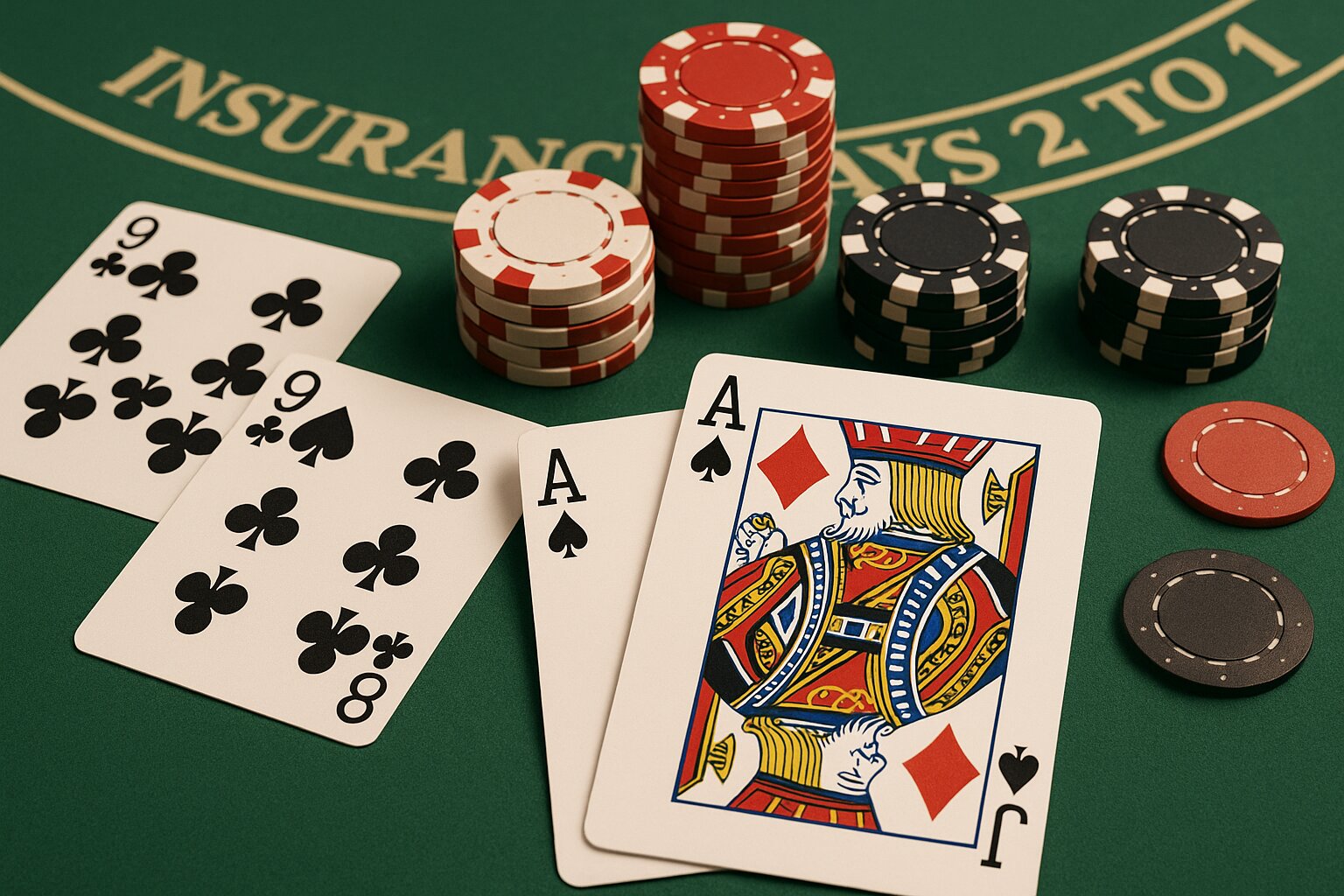
Standard blackjack payouts are straightforward once you know the basics. A blackjack, which is an Ace paired with a ten-value card on your first two cards, usually pays 3:2. So a £10 bet returning a blackjack gives £15 in winnings plus your original stake.
Most other winning hands pay even money, or 1:1. If your total beats the dealer without exceeding 21, a £10 win returns £10 in winnings plus your stake. If you and the dealer tie, called a push, your stake is returned with no additional payout.
Some tables replace 3:2 with 6:5 for blackjacks. That reduces the amount you receive for the same bet and raises the casino’s advantage, so always check the payout displayed for the game you choose.
How Do Blackjack Odds Work?
Blackjack odds describe the probability of various outcomes, such as drawing a blackjack, going bust, or beating the dealer. They depend on the cards in play, how many decks are used, and the table rules.
For instance, blackjacks occur roughly once every 21 hands on average, though that varies with deck count. More decks lower the chance of getting a blackjack slightly. Whether you beat the dealer on a given hand hinges on both your cards and the dealer’s upcard, which is why strategy guides emphasise decisions based on those visible elements.
Odds are useful for understanding risk and for comparing game variations, but they describe likelihoods, not guarantees. Over many hands they translate into measurable returns, which is where the house edge becomes relevant.
The House Edge in Blackjack: What It Means for Players
The house edge is the percentage advantage the casino holds over time. In blackjack, it can be quite small when player-friendly rules are used and basic strategy is followed; a typical figure is around 0.5% under ideal conditions. That means, on average and over a long period, the casino retains around 50p for every £100 wagered.
This long-term perspective explains why short sessions can feel unpredictable: swings up and down are normal, but the house edge describes the expected outcome across many hands. Small rule changes such as different blackjack payouts, dealer behaviour on soft 17, or limits on doubling and splitting can shift this percentage noticeably.
Understanding the house edge helps you choose tables and spot rules that are more favourable for players, which in turn affects how long your bankroll might last.
Comparing Blackjack Payouts to Other Casino Games
Blackjack generally offers better expected returns than many other casino games when played with sensible strategy and good rules. For context, roulette and many slot games typically present higher steady advantages to the house. Baccarat’s banker bet is one of the closer matches to blackjack in terms of house edge, though commissions are usually applied.
These comparisons are useful when deciding which games to play if you value lower long-term loss rates, but remember that variance—how much results can swing in the short term—also differs between games. Blackjack tends to combine relatively low house edge with moderate variance, so outcomes can change hand to hand even when the overall return is comparatively favourable.
Myths About Blackjack Payouts and Odds
There are several persistent myths that can mislead players. One is the idea that past results influence future deals; each hand is an independent event, and past sequences do not change the mathematical probabilities for the next hand. Another is the belief that any betting system can overcome the house edge. Systems can alter the pattern of wins and losses, but they do not change the underlying edge built into the rules.
Some players assume certain times or tables yield better results. In regulated environments, shuffling and dealing processes are designed to prevent predictable patterns, so timing does not alter the odds in any meaningful way.
Knowing what is and is not true about odds and payouts helps you make clearer choices at the table and avoid strategies that offer false promise.
How Can You Identify a Fair Blackjack Payout?
A fair payout is clear, consistent with the published rules, and delivered as advertised. Before playing, check that the game displays its payouts and rules in plain language. Independent testing and regulation provide additional assurance that the game operates as stated and that random outcomes are maintained.
Fairness also means the table rules are visible: how many decks are used, whether the dealer hits or stands on soft 17, if surrender is allowed, and the exact payout for blackjack. These elements together determine how close a game comes to the player-favourable conditions that reduce the house edge.
If any terms are unclear, ask for clarification. Transparency about payouts and rules is the baseline for a positive experience.
The Impact of Deck Number and Game Variations
Deck count and rule variations create measurable differences in outcomes. Games with fewer decks slightly increase the frequency of blackjacks and can lower the house edge. Conversely, multi-deck games make blackjacks a bit less common.
Other variations matter too. A 3:2 payout for blackjack is more favourable than 6:5. Rules on doubling after splitting, limits on re-splitting aces, and whether surrender is permitted all influence expected returns. Even small changes, such as whether the dealer hits a soft 17, alter the house edge and should factor into your choice of table.
Compare these details when selecting a game rather than relying on surface impressions.
Common Winning Hands and Their Payout Values
Blackjack outcomes fall into a few clear categories with established payouts. A blackjack, the Ace plus a ten-value card on the initial deal, typically pays 3:2. Regular winning hands that beat the dealer without being a blackjack pay even money, or 1:1. A tie, or push, returns your stake with no additional payout.
When you split pairs or double down, each hand follows the same payout rules if it wins. Some rules limit what happens to blackjacks after splitting, so check the table’s specifics. These payout structures are fixed by the game rules and are shown before play begins.
Knowing these distinctions helps you interpret results and understand why some rule sets are more rewarding than others.
Why Do Some Casinos Offer Lower Blackjack Payouts?
Lower payout tables such as those paying 6:5 for blackjacks reduce the return for players and increase the casino’s long-term advantage. This change in payout structure directly affects expected returns, making the game less favourable for the player even though the rule appears small on a per-hand basis.
Operators may offer lower payouts for a number of operational reasons, including:
- to differentiate tables and attract players who prefer faster or simpler games
- to improve profitability by shifting the house edge in their favour
- to simplify floor management and reduce variance for the operator
Because the difference between 3:2 and 6:5 seems small per hand, it can be easy to overlook. Over many hands, however, the cumulative effect becomes significant and can substantially reduce a player’s overall return.
Always review the payout displayed for blackjacks and other key rules before you play. Comparing these rules across tables helps you understand how different games impact expected outcomes and make better informed choices.
Understanding Table Rules That Affect Your Winnings
Table rules shape the probabilities and therefore the payouts you can expect. Splitting pairs changes how many active hands you hold and therefore how wins and losses accumulate. Rules about re-splitting or doubling after a split alter the strategic value of those options.
Surrender gives the option to recover half your bet in certain losing situations and can reduce expected losses when used correctly. Whether the dealer hits or stands on soft 17 affects the house edge and changes the relative strength of certain player decisions.
Reviewing these rules helps you find games that match your preferred balance of risk and reward.
Glossary of Key Blackjack Payout Terms
This short glossary clarifies the most useful terms you will see at the table.
Blackjack
An Ace with a ten-value card dealt as your first two cards. Typically pays 3:2.
Even Money (1:1)
A win that pays exactly the amount staked. A £10 win returns £10 in winnings plus the original stake.
Push
When your hand and the dealer’s hand are equal. Your stake is returned with no win or loss.
House Edge
The long-term percentage advantage the casino holds, driven by the game’s rules.
Split
An option to separate a pair into two hands, each with its own bet.
Surrender
A rule allowing a player to forfeit a hand and reclaim half the bet, when offered.
Soft 17
A 17 that contains an Ace counted as 11. Rules may require the dealer to stand or hit on this total.
These terms should make reading rules and comparing tables quicker and clearer. Ultimately, paying attention to payouts and rules before you play will help you choose the options that suit your approach and budget.
Final note: check the rules at the table you intend to play and ensure you understand how payouts and variations affect expected outcomes so your session aligns with your priorities.
**The information provided in this blog is intended for educational purposes and should not be construed as betting advice or a guarantee of success. Always gamble responsibly.