
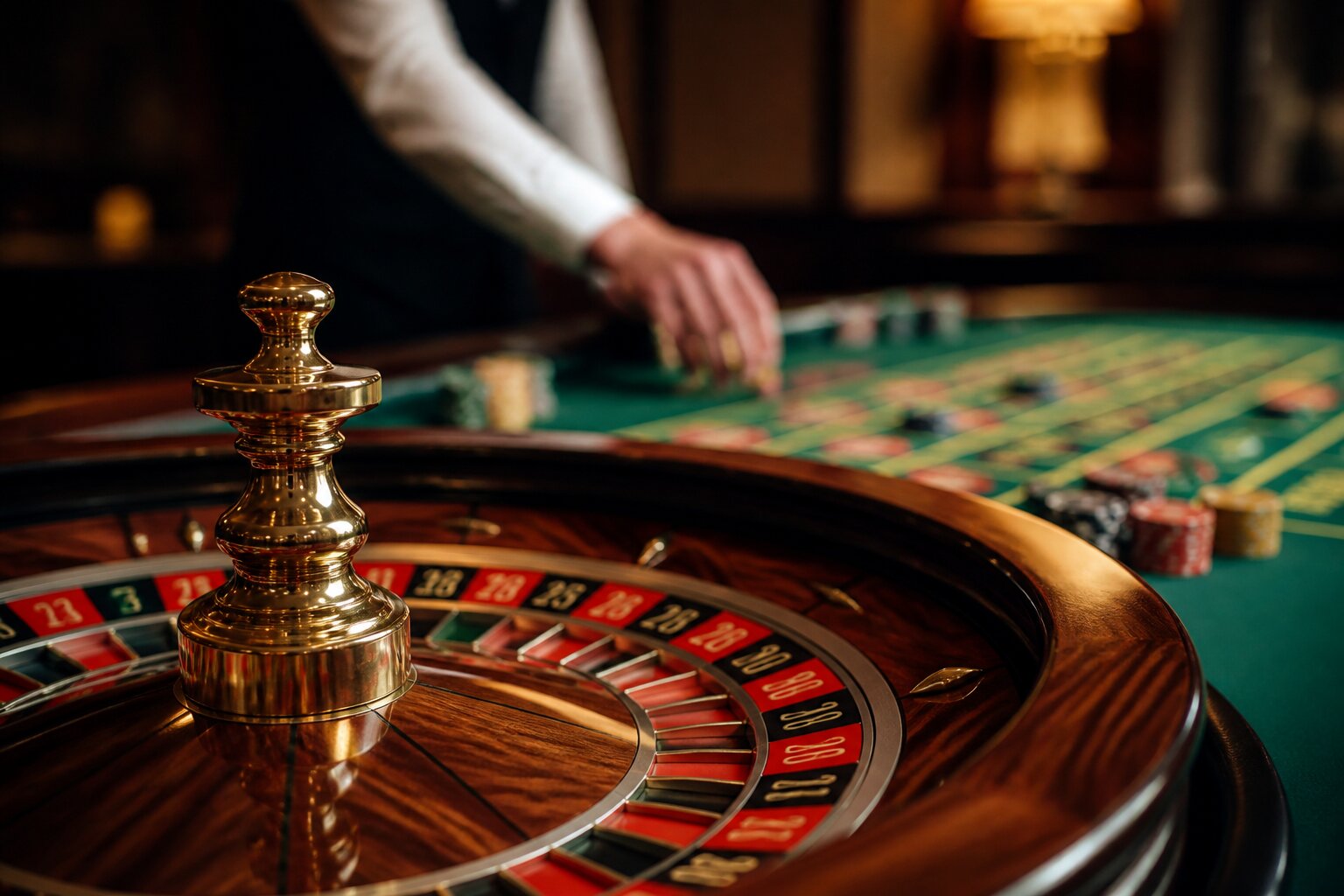
Roulette is one of the most recognisable casino games, with a spinning wheel that draws players in and bets that range from simple colour calls to single numbers. Many want to know whether smart tactics can shift the balance and make the game more profitable.
Before diving into strategies, it's useful to understand the basic mechanics that give the casino its advantage. Read on to learn how the game is structured, why the advantage persists, and what realistic steps you can take to manage play and potential losses.
Understanding the House Edge in Roulette
The house edge is the built-in advantage the casino holds over players. In roulette this comes from the green zero (and double zero in some versions) which creates a gap between the true odds of an outcome and the payouts offered. Over many spins that gap translates into a predictable percentage the casino expects to retain.
European roulette has 37 pockets (numbers 1–36 plus a single zero) and a house edge of about 2.7%. American roulette adds a double zero, bringing the total to 38 pockets and increasing the edge to roughly 5.26%. Those percentages are long‑run averages: for every £100 staked, the casino expects to keep around £2.70 or £5.26 respectively over time.
This math is integral to the game’s rules. Payouts are fixed in advance, and those fixed payouts are slightly lower than the true odds, which is why the house edge exists and why it applies to all players and betting patterns.
What Makes the House Edge Hard to Overcome?
The house edge is embedded in the structure of roulette and does not change with how a player bets. Every spin is independent, with the same probabilities applying each time the wheel is spun. Because outcomes are governed by chance and the payout schedule, no strategy alters the underlying percentages.
A betting system can affect how quickly you win or lose in the short term, but it cannot shift the expected value of your wagers. Over a long series of spins, the statistical advantage built into the game will determine the overall result.
As you read the next section, consider how game variants and small rule changes can change that mathematics—sometimes subtly, sometimes noticeably.
How Do European and American Roulette Compare?
The single most important rule difference between the two main versions of roulette is the number of green pockets. European wheels include one zero; American wheels include both zero and double zero. That extra pocket increases the house edge in the American version, making the expected loss per bet higher on average.
For a player focussed on stretching their bankroll or reducing expected losses, choosing the lower‑edge variant is sensible. However, the presence of any house edge means that even in the lower‑edge version the game’s long‑term expectation still favours the house.
This is a good moment to think about probability itself and how it shapes each spin’s outcome.
The Role of Probability and Randomness in Roulette Outcomes
Each spin of the wheel presents the same set of probabilities. Probability describes the chance that a particular outcome will occur, while randomness ensures that those outcomes cannot be predicted from prior spins. Past results do not change the numerical chance of future outcomes.
Because outcomes are independent, sequences that look unusual—such as a run of the same colour—are possible and expected from a probabilistic standpoint. Randomness yields short‑term variance, where players can experience wins or losses that deviate from the long‑run average. But those short bursts do not alter the expected value of bets.
Understanding this distinction between short‑term swings and long‑term averages helps when evaluating betting methods and what they can realistically achieve.
Do Popular Betting Systems Really Work?
Many betting systems are designed to manage the timing and size of wagers, not to change the underlying odds. These systems may make wins feel more systematic or losses easier to rationalise, but they do not remove the house edge. Over time, the expected returns remain tied to the game’s mathematics.
Using a system can affect variance — how volatile your results are — and can lead to larger or smaller short‑term bankroll swings. That can be useful for shaping how you experience a session, but it does not convert the game into a profitable endeavour in expectation.
Below are two common examples that illustrate these points.
The Martingale System Explained
The Martingale involves doubling a stake after a loss in an attempt to recover previous losses with a single win. In practice the method can rapidly escalate bet sizes, bringing a player into table limits or exhausting their funds long before the expected recovery occurs.
Although a win after several losses can return earlier losses plus a small gain, the risk of a substantial losing sequence makes the approach unsustainable for many players. The system changes the distribution of wins and losses but does not alter the house edge or the game’s expected outcome.
The Myth of “Lucky” Numbers and Superstitions
Some players favour particular numbers or patterns, believing past history or personal preference can influence future spins. Because every spin is independent and governed by the same probabilities, such choices do not change the chance of a number appearing.
Superstitions can shape a player’s experience — making the game feel more meaningful or exciting — but they do not affect the underlying mathematics. When evaluating strategies, it helps to separate rituals that provide enjoyment from methods that claim to improve expected returns.
If you want to reduce the financial downside of play, there are practical approaches that can help without promising impossible gains.
Reducing Your Losses: What Is Actually Possible?
While the house edge cannot be eliminated, there are sensible ways to limit exposure and make play more controlled. Choosing the variant with the lower edge, setting a monetary limit for a session, and using casino features that cap spending or remind you of time spent at the table are common measures players use to manage their activity.
These practices do not change expected returns, but they do change how much you risk and how long you can play within a predetermined plan. Tools that enforce limits, or simply taking planned breaks, can reduce the chance of accidentally exceeding a set budget.
Rather than promising a path to profit, these options aim to keep play within personal boundaries so that wins remain a pleasant part of an entertainment experience and losses stay within acceptable levels.
Why Do Casinos Continue to Profit From Roulette?
Casinos profit because the game’s rules consistently favour the house by a small margin. Every bet is subject to the same expected shortfall relative to fair odds, so when millions of bets are placed that small difference aggregates into a reliable revenue stream.
Short‑term player wins do occur and are part of the game’s appeal, but over many spins and many players the mathematics dominate. That predictable advantage allows casinos to cover operating costs, pay out winners and maintain their business model without relying on unpredictable streaks.
Understanding that structure explains why no single player approach has overturned the house edge.
Is There Any Way to Make Roulette More Favourable?
There is no method that turns roulette into a positive‑expected game for the player. The only realistic ways to influence your experience are indirect: selecting lower‑edge variants, adjusting bet sizes to fit a budget, and using spending limits or session reminders so play remains within chosen boundaries.
Casinos commonly provide features that allow players to impose deposit limits or session alerts; some players also choose fixed, modest stakes and work within those constraints to control variance. These measures can make losses more manageable and reduce the likelihood of impulsive decisions.
Ultimately, the most effective approach is to treat roulette as a structured form of entertainment: choose where you play carefully, be aware of the mathematics at work, and use available tools to keep your activity aligned with personal limits. That way, you keep control of both your time and your spending, and your experience ends on terms you set.
**The information provided in this blog is intended for educational purposes and should not be construed as betting advice or a guarantee of success. Always gamble responsibly.