
Blackjack is one of the most well-known card games in casinos, but many people are unsure about the basics of placing bets. Understanding how betting works helps players make measured decisions and keep play within a set budget.
This blog post explains when bets are placed, what your chips on the table mean during a hand, and how options like doubling down, splitting, and insurance can change what you have at stake. It also looks at how payouts, pushes, and losses are decided, plus how table limits, minimum bets, and the surrender option work.
Whether someone is completely new to the game or simply looking to strengthen their understanding, the aim here is to make the essentials clear so every decision at the table feels more informed.
What Happens When You Place A Bet In Blackjack?
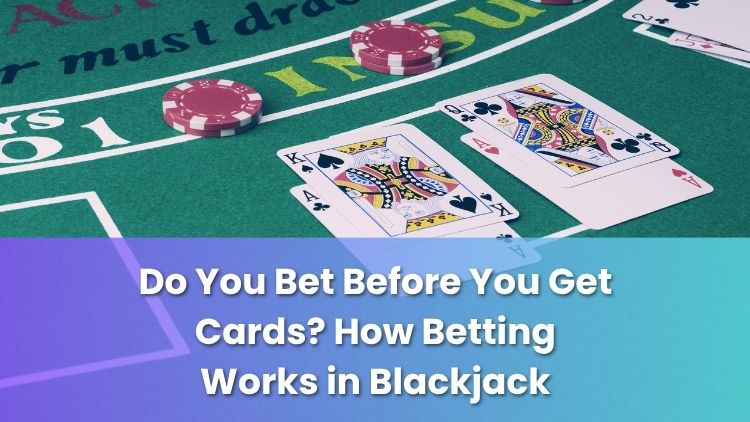
To take part in a round of blackjack, a player places their chips in the betting box on the table. This initial bet is the amount at risk for that hand and it needs to be on the layout before any cards are dealt. Once all bets are made, the dealer begins the round.
After the first two cards are dealt, any decision the player makes relates back to that first stake. Choosing to hit or stand does not change the amount already wagered. Certain options, such as doubling down or splitting, can require an extra bet, but the original wager still anchors the hand.
The round is settled once the dealer finishes their hand and compares it to each player’s total. At that point, the casino pays winning bets, returns any pushes, and takes losing wagers. So when exactly do you put that first chip down?
When Do You Place Your Initial Bet?
At the start of each round, players place their initial bet before any cards are shown. Chips go into the betting area, and the dealer waits until everyone has finished staking. In a land-based game this is confirmed by a hand signal, while online tables usually show a short betting timer.
Once the dealer closes betting, no changes can be made to that hand’s stake unless the rules allow it later through built-in options like doubling or splitting. No cards are dealt until this point is reached.
That timing leads to a common follow-up: does the dealer ever deal before bets are closed?
Does The Dealer Deal Cards Before Bets Are Closed?
No. In standard blackjack, dealing only begins after all initial bets are placed and the dealer has confirmed that betting is closed. This protects the integrity of the round by making every wager final before any information is revealed.
From there, the hand proceeds in order. Players act on their two-card hands, and the dealer resolves last. No fresh bets can be added mid-hand other than those specifically allowed by the rules, which keeps the process clear and consistent for everyone at the table.
With the flow of a round set, it helps to know which choices can increase the amount you have riding on that hand.
How Doubling Down And Splitting Affect Your Bet
Two common options can change the total you have at stake after the deal: doubling down and splitting.
Doubling down lets a player increase their wager by an amount equal to the original bet after receiving the first two cards. In return, they receive exactly one additional card and the hand then stands. For example, with a £10 initial bet, doubling down adds another £10, making £20 total at risk on that hand. Some tables allow doubling after a split, while others restrict it, so it is worth checking the house rules.
Splitting applies when the first two cards are a pair, such as two eights. The player may split them into two hands by placing a second bet equal to the original stake. Each hand is then played separately. If the initial bet was £10, splitting creates a second £10 hand. Many games allow re-splitting up to a set limit, and some impose special rules on split aces, such as receiving only one card on each ace.
There is also a side bet that appears only in a very specific situation.
What Is Insurance And When Can You Take It?
Insurance is an optional side bet offered only when the dealer’s face-up card is an Ace. It is a separate wager, typically equal to half of the original bet, placed on the dealer having blackjack.
If the dealer does have blackjack, insurance pays 2 to 1. Using a £10 main bet as an example, the insurance stake would be £5 and would return £10 profit if the dealer has blackjack. The main bet would usually lose unless the player also has blackjack, in which case the main hand is normally a push. If the dealer does not have blackjack, the insurance bet is lost and the hand continues as normal.
Some tables also offer even money when a player has blackjack and the dealer shows an Ace, which is simply a different way of settling the same scenario. However the choice is presented, insurance only appears at this one moment in the round.
However the hand unfolds from there, every chip on the felt is settled in one of a few straightforward ways.
How Bets Translate To Payouts, Pushes And Losses
At the end of a round, the dealer compares each remaining player’s hand to their own and settles the outcome:
A payout is made when the player’s total beats the dealer’s without going over 21, or when the dealer busts. A standard win usually pays 1 to 1. A natural blackjack, which is an Ace plus a ten-value card on the initial deal, typically pays 3 to 2, although some tables use different rates, so it is sensible to check the rules shown at the table.
A push occurs when the player and dealer have the same total, including blackjack versus blackjack. In a push, the original bet is returned with no win or loss for that hand.
A loss happens if the player’s total exceeds 21 or if the dealer’s final hand is higher. In those cases, the original bet is collected. Side bets, such as insurance, are always settled independently of the main hand.
Before any of that happens, though, the table itself sets boundaries for how much can be wagered.
How Table Limits And Minimum Bets Work
Every blackjack table displays a minimum and maximum bet for each hand. The minimum is the smallest stake a player can place, and the maximum is the highest. These are usually shown on a placard at the table or on-screen for online games, for example £5 minimum and £500 maximum.
Limits exist to keep play orderly and to help players choose a table that suits their budget. Chip denominations and bet increments are also defined, so a table with a £5 minimum may accept £5, £10, £15, and so on, in clear steps. Checking these details before sitting down avoids surprises once the cards are in motion.
Some tables also offer one further option that can reduce exposure on a poor starting hand.
What Happens To Your Bet If You Surrender?
Surrender allows a player to fold the hand after seeing the first two cards in exchange for giving up half of the original bet. The round then ends for that player. This option is usually available only before taking any further action, and at many tables it is the late surrender variant, which means it is offered after the dealer checks for blackjack. Availability and exact timing vary by game, so it is worth reading the table rules.
If surrender is chosen on a £20 bet, £10 is returned and £10 is taken by the house. It can be a practical way to limit the cost of a particularly weak start rather than playing it through to the end.
If you choose to play blackjack, set personal limits that suit your circumstances and only stake money you can afford to lose. If gambling starts to affect your well-being or your finances, seek support early. Independent organisations such as GamCare and GambleAware offer free, confidential help.
Understanding when bets are placed, how they can change, and how they settle will help you approach every hand with clarity from the first chip to the last.
**The information provided in this blog is intended for educational purposes and should not be construed as betting advice or a guarantee of success. Always gamble responsibly.