
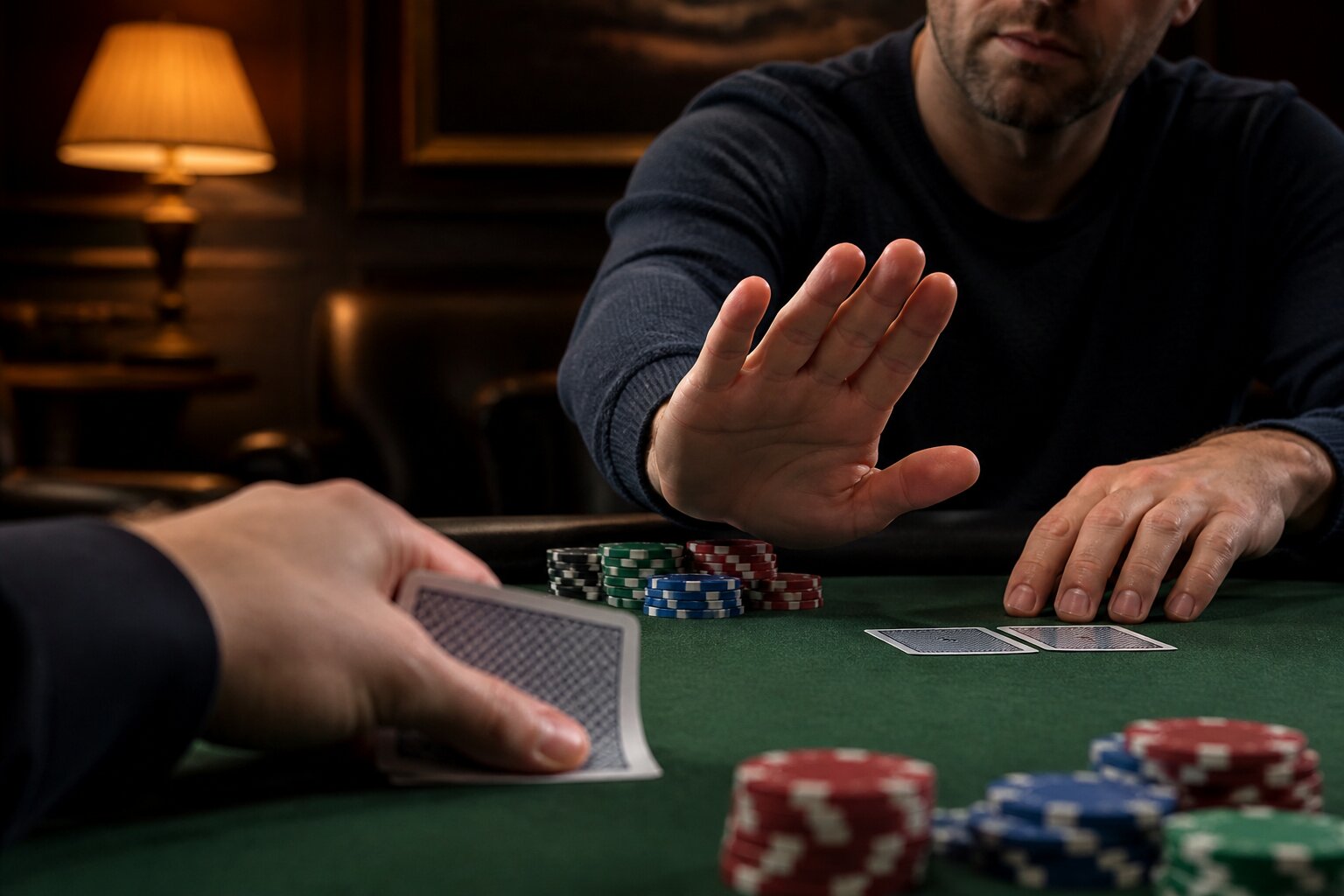
Ever wondered why some players manage to win pots without showing the best cards? That comes down to fold equity — the chance your bet makes an opponent give up. Understanding it moves you beyond simple hand strength and into the realm of pressure, timing and shot selection.
This article explains what fold equity is, how to estimate the fold percentage you need for a bluff or bet to break even, and the practical factors that change it from one situation to the next. Where helpful, examples clarify the maths and the thinking behind the decisions.
A quick note: this content is for adults aged 18 and over and aimed at improving decision-making and enjoyment. Keep play controlled and within your limits.
What Is Fold Equity in Poker?
Fold equity is the added value you get when a bet or raise forces an opponent to fold a better hand than yours. It represents the portion of the pot you can claim simply by making the right move, without having to reach showdown.
Think of it this way: when you make a bet, you are not only trying to improve your hand or extract value; you are also buying the chance that your opponent will fold. That chance — expressed as a percentage — is the fold equity. It matters whether you are bluffing or semi-bluffing with a drawing hand, because the potential to win the pot immediately changes how profitable those plays are.
Fold equity becomes a strategic tool when combined with other elements of play: your read on opponents, how you size bets, and the stage of the hand. Read on to see how to turn that concept into a usable calculation.
Why Does Fold Equity Matter?
Fold equity widens the ways you can win. If you only relied on having the best hand at showdown, many profitable opportunities would be missed. By recognising when a bet can make opponents fold often enough, you can turn marginal or drawing hands into long-term winners.
Evaluating fold equity also helps you avoid wasted risk. Knowing the percentage of folds you need to make a bet profitable prevents you from overcommitting in spots where opponents are likely to call. In practical terms, it sharpens judgment about which hands to pressure and how large those bets should be.
This does not remove uncertainty from the game — variance still exists — but it replaces guesswork with reasoned choices about when aggression is likely to pay.
How Do You Calculate Fold Percentage in Poker?
Calculating the fold percentage tells you how often an opponent must fold for your bet to be profitable. The basic idea is to compare the cost of your bet to the total amount you can win if the opponent folds.
In plain terms, if you put a bet B into a pot P, the opponent must fold at least B divided by (B plus P) of the time for the bluff to break even. Written as a formula:
Fold percentage needed = B / (B + P)
For example, with a pot of £40 and a planned bet of £20, the fold percentage needed is £20 divided by £60, which equals 33%. If you estimate the opponent will fold more than a third of the time in that situation, the bet is mathematically justified as a bluff. If they fold less often, the expected return is negative.
This calculation applies whether you are bluffing or semi-bluffing. When you have a drawing hand, you should combine this fold-equity assessment with your chance of improving at showdown to judge the overall value of the action.
Factors That Influence Fold Equity
Fold equity is fluid. It depends on several things, so avoid relying on fixed numbers and instead form realistic estimates based on the situation.
- the players involved
- the size of your bet
- the broader context of the hand
Understanding these influences helps you make better, more defensible choices at the table.
Player Types and Tendency to Fold
Different opponents have different calling thresholds. Some are cautious and fold frequently when faced with aggression. Others are sticky and call down with marginal hands.
Observing tendencies over several hands gives you a baseline for estimating future fold rates. Pay attention to how players have reacted to similar bet sizes and board textures earlier in the session. Look for patterns: frequency of folding to preflop raises, willingness to c-bet, and how often they give up on later streets.
Bet Sizing and Pressure
How large your bet is relative to the pot changes the incentive for an opponent to call. Small bets often invite calls; bigger bets raise the price of seeing the next card or reaching showdown.
Effective bet sizing strikes a balance:
- large enough to make opponents pay to continue
- not so large that you create improbable fold expectations against resistant players
The right size also depends on stack depth and table dynamics. Against opponents who call frequently, a single large bet may not get the fold, while a sequence of well-sized bets can apply consistent pressure.
Board Texture and Storytelling
The community cards shape the credibility of your bet. Boards that favour bluffs, for example those that complete obvious draws, increase fold equity against opponents who perceive a coherent story.
Conversely, dry or highly coordinated boards can reduce fold equity because they make it easier for opponents to believe their own hands. How well your bet aligns with a believable narrative affects the chance of a fold. Consider previous actions in the hand and whether your line represents a realistic range that includes the strong hands you are pretending to have.
Stack Sizes and Pot Commitment
Short stacks have different incentives than deep stacks. Players facing the prospect of committing a large portion of their chips are more likely to fold certain holdings, while those already pot-committed are more likely to call.
Also consider effective stack size and the stack-to-pot ratio. When the ratio is low, decisions tilt toward all-in calls or folds; when it is high, players have more room to fold and wait for better spots. Estimating fold equity requires thinking about how close opponents are to an all-in decision and how much of their chips remain.
Common Misconceptions About Fold Equity
Some ideas about fold equity are repeated so often they become misleading. Clarifying a few common mistakes helps you use the concept more effectively and keeps expectations realistic.
Common misconceptions include:
-
Fold equity guarantees wins. It does not. Fold equity represents a probability that an opponent will fold to your bet or raise. That probability can improve your expected value, but outcomes still vary from hand to hand and you will experience both favourable and unfavourable results over time.
-
Bluffing more always increases fold equity. Increasing the frequency of bluffs can sometimes produce more folds, but over-bluffing changes how opponents view you. If they start to see you as overly aggressive, they may call or raise you more often, which reduces your fold equity and can cost you chips.
-
Relying only on pure maths is sufficient. Mathematical calculation of pot odds and fold equity is essential, yet it is not the whole story. Behavioural and contextual factors matter too, such as table dynamics, stack sizes, opponent tendencies and the way a hand has been played. Effective decision-making blends calculation with careful observation.
Understanding these pitfalls keeps your use of fold equity realistic, helps you manage risk and supports long-term, responsible play.
How Can You Use Fold Equity to Improve Decisions?
In practice, fold equity informs the balance between betting for value, betting as protection and betting as a bluff. When you evaluate a spot, combine the fold percentage needed with your read on the opponent and the likelihood of improving your hand. That combined view helps determine whether an aggressive line or a more cautious approach fits the situation.
For example, on the river a bet that requires a 40% fold rate may be sensible against a cautious player but unprofitable against someone who calls down light. On earlier streets, semi-bluffing with potential to improve can be attractive when the fold percentage is moderate because you gain both the chance to take the pot immediately and the chance to win at showdown.
Over time, using fold-equity thinking trains you to see spots where aggression produces value and where restraint protects your stack.
Summary: Understanding Fold Equity in Your Poker Game
Fold equity adds a crucial layer to poker strategy by turning pressure into a measurable component of decision-making. It is not a shortcut to outcomes but a tool that, when combined with reads, bet sizing and stack considerations, helps you choose better actions.
Learn to estimate the fold percentage your bet requires, watch how opponents respond in different situations, and let that information shape your play. Keep sessions controlled and within your means, and if you ever find gambling affecting your wellbeing, seek support from a trusted resource such as BeGambleAware.
Use fold equity thoughtfully, and it will become a steady aid in making smarter choices at the table.
**The information provided in this blog is intended for educational purposes and should not be construed as betting advice or a guarantee of success. Always gamble responsibly.