
Blackjack is one of the most popular casino table games, but it can feel confusing when you first sit down. From card values to dealer rules, there’s a bit to learn before you feel comfortable at the table.
One question that comes up a lot is simple: how many cards do you get at the start of a hand? This article explains that clearly and walks through the relevant details so you know what to expect when you play.
Ready to find out more? Let's dive in!
What Is the Standard Number of Cards Dealt in Blackjack?
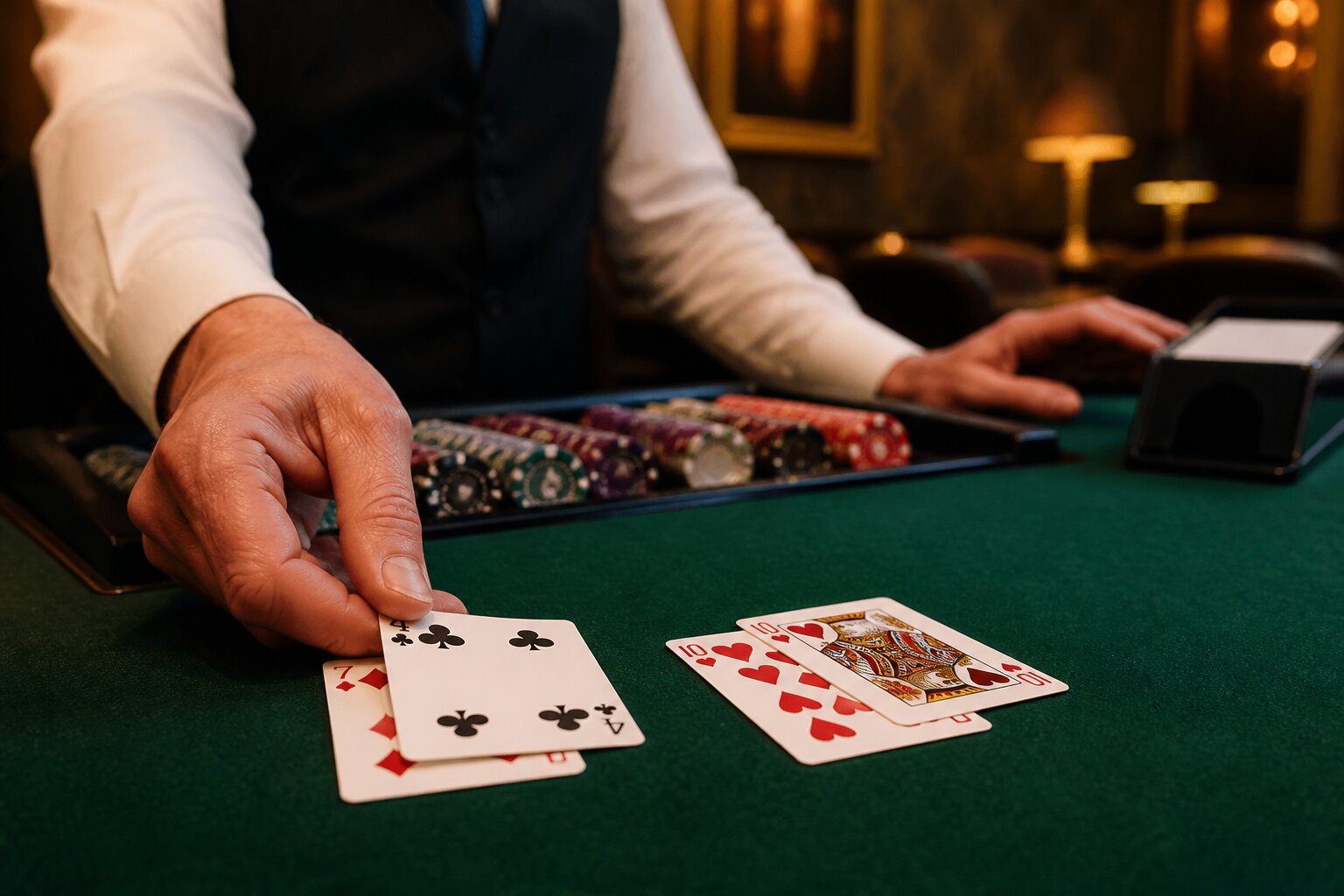
At the start of a blackjack hand, each player is dealt two cards and the dealer receives two cards as well. One of the dealer’s cards is face up so everyone can see it; the other remains face down until the dealer plays. This two-card opening is the rule in almost every blackjack game you’ll encounter.
That initial pair of cards is the basis for decisions in the rest of the round: whether a player stands, asks for another card, doubles down, or splits a pair. Because everyone starts with two cards, the early part of the hand is straightforward and easy to follow.
How Does the Card Dealing Process Work?
The dealing process is kept simple to make play transparent. After the deck (or shoe) is shuffled, the dealer deals one card to each player in order, then a second card to each player in the same sequence. Players’ cards are usually dealt face up so the table can see each hand; the dealer’s second card stays face down until the dealer’s turn.
Games will make the dealing rules clear and visible, and table procedures ensure the deal is consistent from hand to hand. Knowing this sequence helps you read the table and plan your choices as the hand develops.
Does the Number of Starting Cards Change in Different Blackjack Variations?
Most blackjack variants begin the same way: two cards to each player and two to the dealer. Variants may alter other aspects—such as whether the dealer checks for blackjack, when doubling is permitted, or how payouts are handled—but the initial two-card deal is almost always constant.
There are a few exceptions in specialised formats. For example, in Double Exposure Blackjack the dealer’s cards may both be shown, and some novelty games add side bets or bonus mini-games that interact with the opening deal. If you try an unfamiliar version, take a moment to read its rules so you’re clear on any differences.
Common Variations in UK Casinos
Several popular forms of blackjack are frequently offered. These commonly include:
- Classic (or "standard") Blackjack
- European Blackjack
- Blackjack Switch
While the basic outline — each hand starting with a two-card deal — is the same, the precise rules can differ in ways that affect play and outcomes. For example, Blackjack Switch allows players to exchange cards between hands, and European Blackjack often has a different approach to the dealer's hole card.
Knowing the particular table rules helps you adapt to each version. Key points to check include:
- whether the dealer hits or stands on a soft 17
- how surrender is handled (if available)
- the number of decks in use
- table minimums and maximums and the payout for a blackjack
A quick look at the game information or rules panel will flag any significant differences before you play, allowing you to choose the variant that suits your preferences and risk tolerance.
Is the Dealer Dealt the Same Number of Cards as Players?
Yes. Both the dealer and each player start with two cards. The key difference is visibility: one of the dealer’s cards is face up while the other is concealed until the dealer plays their hand. This concealment is important because it affects the information available to players when they make decisions.
Understanding that the dealer’s beginning hand mirrors the players’ starting hands (in quantity) helps clarify why the game proceeds the way it does. You and the dealer work from the same starting point, then follow the rules to arrive at a result. The dealer, unlike players, generally follows a fixed set of rules when taking further cards, which removes discretionary play by the house and keeps outcomes consistent.
The face up card can influence a player’s perception of the dealer’s likely final total, but it does not change the number of cards initially dealt. Remember that the concealed card remains part of the dealer’s hand and is revealed only when the dealer plays according to the rules.
Play responsibly. If you have concerns about gambling, seek help from local support services.
Are Extra Cards Ever Dealt When the Game Begins?
Extra cards are not part of the standard initial deal. The main blackjack hand always starts with two cards dealt to each participant, including the dealer, unless a game variant explicitly states otherwise.
Occasionally a game will include side bets or promotional features that provide additional cards or separate bonus outcomes. These are separate from the primary two-card start and are described in the specific game rules.
Common examples of such features include:
- side bets that resolve immediately and may use extra cards
- bonus rounds that award additional cards or payouts
- promotional hands or mini-games offered alongside the main deal
These features are relatively uncommon and, when they appear, they are clearly identified so players understand how they affect play and payouts. On digital platforms, the game interface and rule screens will show any differences before play begins. For the main blackjack hand, expect two cards for every participant at the outset.
Explaining the Importance of Initial Card Count in Blackjack
The two-card opening is crucial because it frames the entire hand. With those first two cards you immediately assess the strength of your position, estimate how the dealer might play, and start choosing among your available options. Those options typically include:
- taking more cards (hit),
- standing,
- doubling down,
- or splitting a pair.
Because information is limited at the start, decisions must be strategic rather than automatic. You do not know every future card, so you weigh probabilities, the dealer's visible card, and basic strategy principles to decide the most likely path to a win. That thought process is what separates casual play from a considered approach.
This structure is what gives blackjack its mix of straightforward mechanics and meaningful choice. Each decision builds on the starting cards, so understanding the deal helps you follow the logic of the game as it unfolds. Knowing why a particular two-card combination is strong or weak makes subsequent moves clearer and more consistent.
Remember that blackjack remains a game of chance with a built-in house edge. Play responsibly and only wager what you can afford to lose.
Card Count Myths: Do More Starting Cards Increase Your Chances?
Some players assume that receiving more cards at the start would improve their prospects, but the rules ensure every player begins equally. The standard two-card deal is part of the game’s fundamental design and changing the initial card count would alter the balance between player decisions and dealer obligations.
That balance affects strategy, pace and the built-in advantages or disadvantages of the house. Keeping the two-card start helps maintain consistent play across tables and casinos, so outcomes remain comparable from session to session.
If you hear claims about unusual starting hands or special openings, they usually refer to side bets or specially themed tables rather than the main blackjack deal. These variations are separate products with their own rules, payouts and odds.
Always check the specific game rules and table signage to understand what is happening at a particular table, and confirm whether a promotion or side bet is in play. If you are unsure, ask staff for clarification before placing bets and remember to play responsibly.
Key Takeaways on Starting Cards in Blackjack
Here are the main points to remember about starting cards:
- Both players and the dealer receive two cards each at the start of every hand.
- This initial two-card deal is standard across most blackjack variants.
- Extra starting cards are rare and typically tied to separate side bets or special promotions.
- The opening two cards shape the decisions you make as the hand progresses.
Play within limits and be aware of the rules at any table you join. With a clear sense of the opening deal and the way it guides play, you’ll find blackjack easier to follow and more engaging from hand to hand.
**The information provided in this blog is intended for educational purposes and should not be construed as betting advice or a guarantee of success. Always gamble responsibly.