
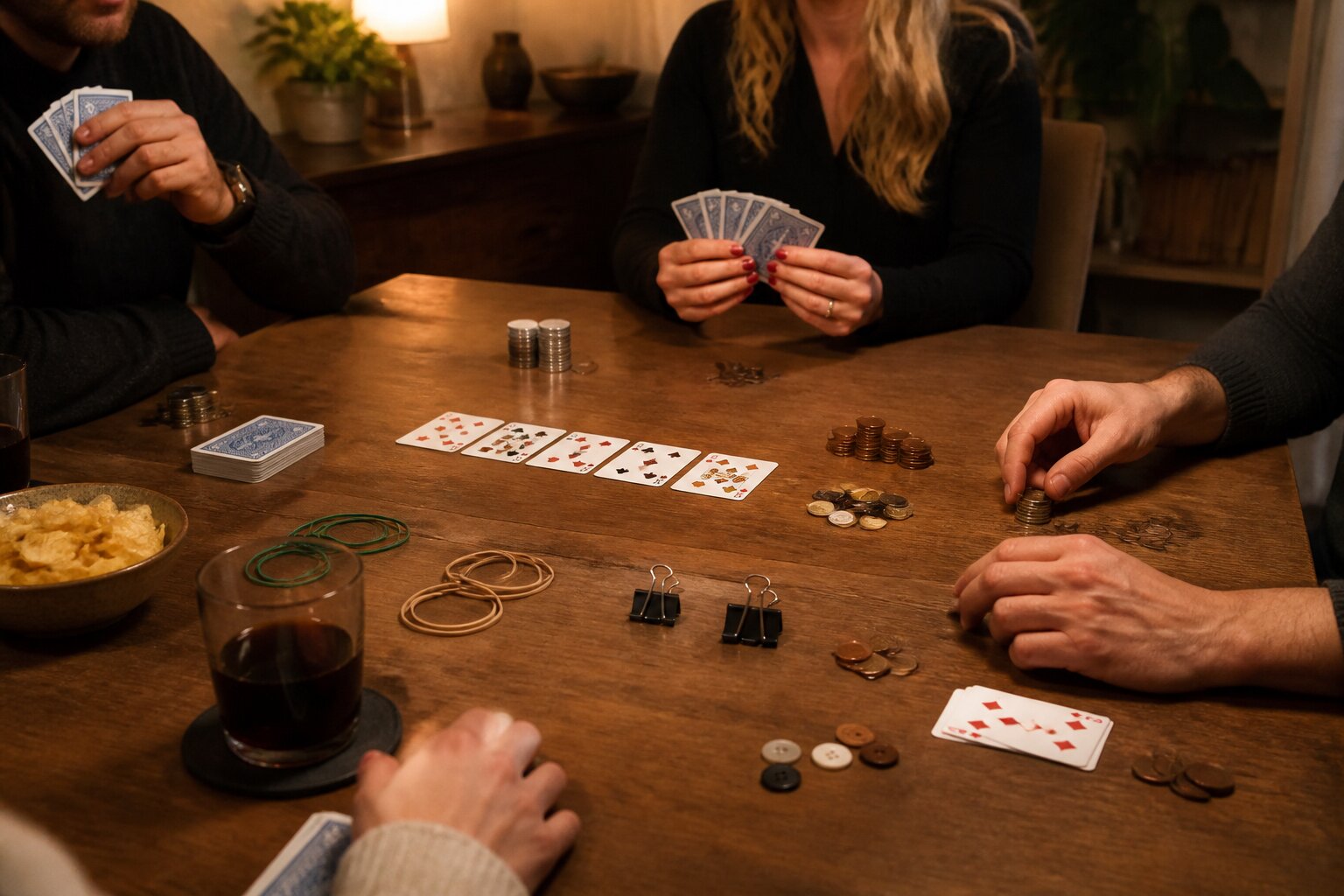
Planning a poker night but realised you don’t have any chips? Don’t let missing pieces spoil the fun. Whether your chip set is lost, you’re away from home, or you simply want an impromptu game, there are plenty of creative ways to keep the action going.
This guide shows simple household substitutes, do-it-yourself tokens and practical tips to keep play fair and flowing. Read on for easy ideas that will have the cards on the table—and stakes in play—without an official chip set.
Why Play Poker Without Chips?
There are perfectly good reasons to play without traditional chips. Sometimes it’s practical: you’ve forgotten a set, you’re travelling, or you’ve been invited to a last-minute get-together. Other times it’s a deliberate choice to make the evening feel more relaxed and novel.
Substitutes often add character to a home game. Using everyday objects can spark conversation, encourage creativity and remove the formality that some players find off-putting. With clear values and an agreed system, substitutes keep the game fair while shifting the focus toward social interaction.
If you want to make the evening even more memorable, you can personalise tokens or introduce a theme. Next, we’ll look at common household items that make convenient and easy-to-recognise alternatives.
Popular Household Alternatives to Poker Chips
Many items around the house work well as stand-ins for poker chips, provided they’re easy to count and keep separate. Coins are the most obvious option: different denominations naturally represent different values and are simple to distribute.
Buttons, bottle caps and coloured beads are also excellent because they often come in several sizes or colours, which helps distinguish value levels. Dry pasta, such as penne or macaroni, can be used where a tactile, inexpensive token is preferred, and small Lego pieces or game counters from board games step in neatly when you want sturdier tokens.
The main aim is to pick substitutes that won’t be easily mixed up during play and that everyone finds comfortable to handle. After you’ve chosen your items, the next step is deciding how to assign their values.
How to Assign Value to Homemade Poker Tokens
Assigning values to homemade tokens keeps betting straightforward. Start by choosing a clear base unit for the smallest token and use a simple progression for higher values - for example 1, 5, 10 and 25. Distinct colours or sizes should map to those values so players can make quick decisions during a hand.
Give everyone an equal starting stack in terms of total value, not necessarily identical pieces, and display the value key where all players can see it. If any tokens are similar in appearance, mark them with a small sticker or pen to avoid mix-ups.
Keeping the increments consistent makes counting and exchanges simple, and a brief demonstration hand can help settle any remaining uncertainty before the game begins. With values agreed, you can move on to creative ways to make or modify tokens for a more personalised game.
Creative DIY Poker Chip Ideas for Home Games
If you want tokens that look more deliberate, there are several DIY approaches that are quick and inexpensive. Cardboard cutouts coloured with pens or markers can be made in minutes; writing a value on each token ensures clarity. Self-adhesive labels on coins or bottle caps create neat, recognisable pieces without much fuss.
Craft supplies such as coloured counters, small wooden discs or unused board-game pieces can be repurposed and decorated with acrylic paint or nail polish to create a cohesive set. For a reusable option, consider laminating paper tokens or sealing labels with clear tape so they won’t wear through the evening.
DIY chips also make a pleasant talking point and can be themed to suit your night. When you’ve finished making tokens, it’s worth taking a few moments to sort and stack them; organised piles speed up betting and make the game feel more polished.
What Can You Use Instead of Poker Chips?
Switching chips for household items needn’t be awkward. The priority is that substitutes are easy to identify, quick to count and comfortable to handle. Think about distinct sizes, colours or textures so everyone can tell values at a glance, and keep the number of denominations small to avoid confusion.
Below are three common approaches that suit different tastes and levels of formality.
Coins and Spare Change
Coins provide a natural scale for stakes and are simple to distribute. You can assign lower-value coins to smaller bets and higher denominations to larger ones; this mimics the structure of a chip set and makes cashing out straightforward at the end.
Using coins also reduces the likelihood of losing tokens between hands, since people are used to handling them. A potential downside is noise on the table, so place them on paper or a mat if you prefer a quieter game.
Everyday Objects Found at Home
Buttons, bottle tops, beads, dried pasta or Lego pieces all work as tokens. Their variety lets you build a clear value hierarchy, and their informal look suits a relaxed social game.
Choose items that are similar in size within each value to help players count stacks quickly. If children are present, pick non-chokable items or keep small pieces out of reach to keep the game safe.
Printable Paper Chips and Vouchers
If you want neat, uniform tokens, printable chips or handwritten vouchers are a good option. Use coloured paper to differentiate values and consider laminating for reuse. These work especially well if you prefer a tidier table without loose coins.
Paper chips are easy to scale for different stake levels and to replace if lost. For a more durable option, glue paper to cardboard or use card sleeves so they last through multiple sessions.
Having chosen a token type, the next section explains how to organise the game so play runs smoothly. Before you begin, agree a stake level and set a time or buy‑in limit so the game stays friendly and within everyone’s comfort zone.
Organising a Poker Game Without Traditional Chips: Step by Step
Start by selecting your token type and separating pieces into clearly labelled piles. Ensure each player receives an equal total value, and place a visible chart showing what each token represents so there’s no confusion during betting.
Set a reasonable buy-in and agree on betting limits before the first hand begins. These should suit everyone’s budgets and expectations—keeping stakes modest helps maintain an enjoyable atmosphere. Make sure all players are of legal age if you decide to play for real money and that everyone consents to the terms.
During play, encourage players to keep tokens neatly stacked and to call out raises clearly. If a dispute arises about token values or counts, pause the game and resolve it with the agreed chart or a quick recount. When the session ends, collect and check tokens together, settling any cash exchanges in line with what was agreed at the start. This approach keeps the game fair and straightforward from start to finish.
Key Things to Consider for a Smooth Game
Fairness and clear communication are essential. Take a moment at the outset to explain token values and any house rules that affect play, particularly if some players are new to poker or your chosen substitutes.
Choose tokens that are easy to sort and handle; tiny or similar-looking items can slow play or cause disputes. Keep buy-ins and stakes appropriate for the group, and encourage breaks if someone needs them. Responsible play helps everyone stay comfortable and enjoy the evening.
A calm, organised table makes it easier to focus on the hands and the social side of the night. With those basics in place, you can add theme or flourish without compromising clarity.
Making Your Poker Night Fun and Themed Without Chips
Themes and small touches help transform a home game into an event. Match tokens to a theme - sweets for a retro evening, foil-wrapped chocolates for a “gold rush” motif, or simple coloured tokens to complement a colour-coded table. Light decorations, a playlist and themed snacks can enhance the atmosphere without distracting from play.
Encourage players to bring a small prop or wear a costume element if you want something playful, and consider awarding informal prizes such as a small treat for a stylish bluff or best-two-hands story. Keep the focus on shared fun and interaction: a themed night should amplify enjoyment, not make the game more complicated.
Now that the atmosphere is sorted, it’s sensible to address questions about fairness and legality for peace of mind.
Is it legal to play poker at home using substitutes for chips?
In the UK, private poker games held at home are generally lawful when they are genuinely social, not operated for profit and not run as a business. Using household tokens or DIY chips is acceptable in these settings, provided the stakes remain reasonable and all participants agree.
Keep the event clearly private and ensure any money involved is handled transparently. If in doubt about local rules, choose non-cash stakes or keep wagers small to avoid potential complications. Ensuring everyone understands the terms before play begins protects the group and keeps the evening friendly.
How can we keep the game fair without standard chips?
Fair play depends on agreed values, uniform starting stacks by total value, and clear rules. Visible value charts and pre-sorted token piles reduce disputes, and occasional tally checks help maintain trust among players.
Will homemade alternatives slow down the game?
They can if items are hard to handle or similar in appearance. Organising tokens into neat stacks and assigning clear, consistent values prevents most delays and keeps rounds moving at a good pace.
Is playing without chips suitable for all players?
Yes, substitutes suit most groups if everyone is comfortable with the arrangement and stakes are modest. Choosing accessible tokens and explaining the system briefly keeps play inclusive and straightforward.
With these points covered, you should feel confident running a smooth, enjoyable poker night without a professional chip set—just pick sensible tokens, agree the values, and concentrate on good company and fair play.
**The information provided in this blog is intended for educational purposes and should not be construed as betting advice or a guarantee of success. Always gamble responsibly.