
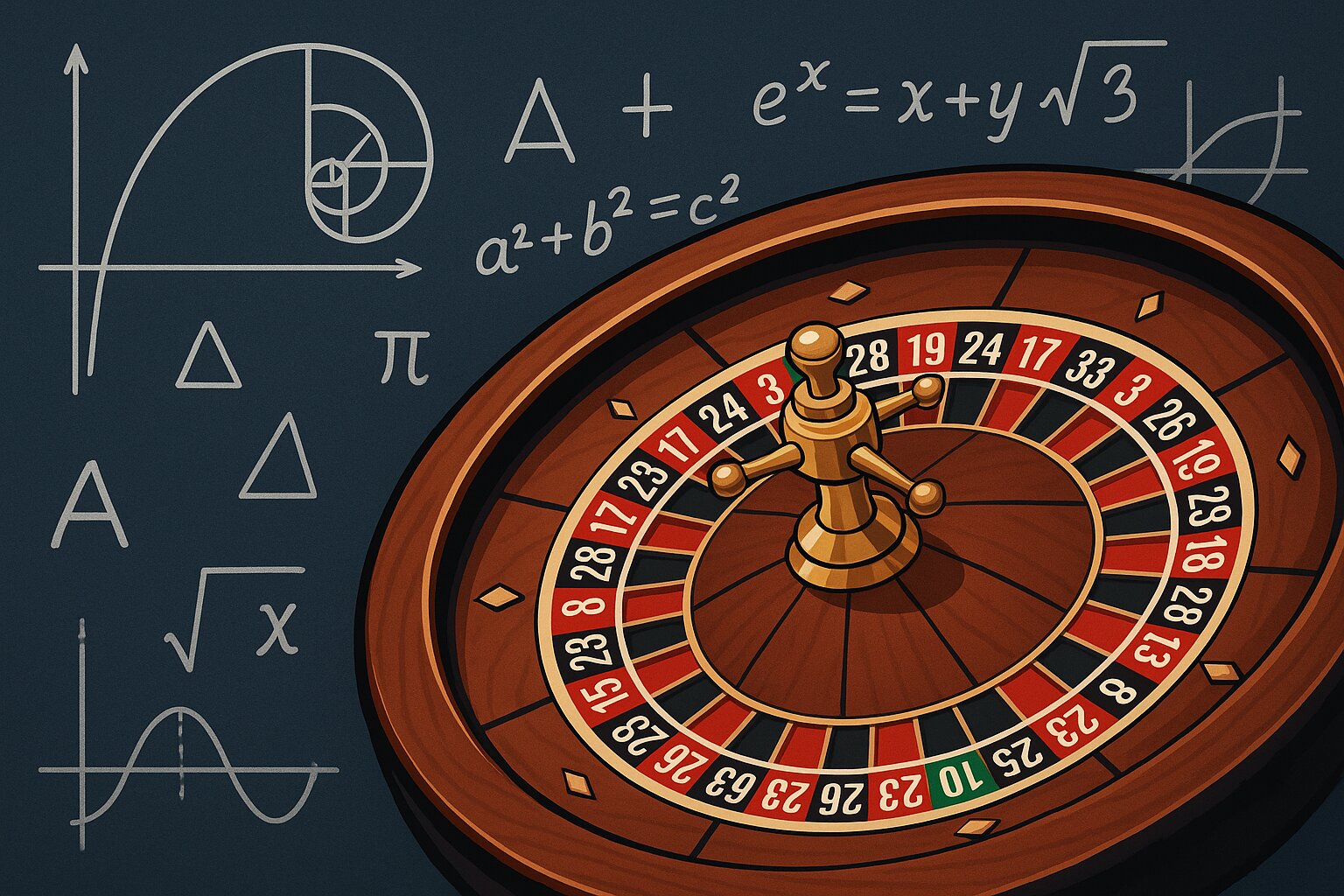
Roulette is one of the most recognisable casino games and it naturally attracts people looking for an edge. Over the years, players have developed systems and searched for patterns that promise better results.
This article cuts through those ideas and explains the maths behind common strategies, so you can see what’s realistic and what isn’t. Read on to understand how roulette works and what you should expect when you play.
What Is the House Edge in Roulette?
The “house edge” is the built-in advantage the casino has on every bet, expressed as a percentage of wagers over the long run. It is a central concept because it explains why, across many spins, the house keeps a portion of the total stakes.
In roulette, that edge comes from the presence of one or more zero pockets on the wheel. European roulette, with a single zero, produces a house edge of about 2.7%. American roulette, with both zero and double zero, increases the edge to around 5.26%. Those percentages may seem small on a single spin, but repeated play magnifies their effect and results in a steady advantage for the house.
Understanding the house edge helps set realistic expectations: payouts may be generous on a win, but the odds are structured so the casino retains an expected margin over time.
Can Probability Theory Predict Roulette Outcomes?
Probability theory describes how likely particular outcomes are, and it can tell you the chance of landing on a specific number, colour, or section. For example, a single-number bet on a European wheel has a 1 in 37 probability based on the wheel’s composition.
However, probability doesn’t provide a way to forecast the next spin. Each spin is independent, so past results don’t change the mathematical chances of future outcomes. That independence is why systems that rely on perceived patterns cannot reliably predict spins.
Probability is useful for comparing bets and understanding expected returns, but it doesn’t convert into a method for consistently beating the game.
The Role of Randomness in Roulette Wheels
Randomness is fundamental to how roulette operates. In physical wheels, careful engineering and maintenance aim to prevent any number from being favoured, and small variations in the ball’s motion mean outcomes are not predictable from one spin to the next.
Online games use Random Number Generators (RNGs) to produce results. Those RNGs are tested and audited to ensure fairness and unpredictability, with oversight from regulatory bodies such as the UK Gambling Commission. The effect is the same: spins are meant to be independent and impartial.
Because of this emphasis on unpredictability, there isn’t a reliable pattern an observer can exploit to improve long-term results.
Are Popular Roulette Systems Backed by Mathematics?
Many betting systems adjust stakes after wins or losses with the aim of managing bankroll movement. They can provide structure to play and a clear plan for staking, but none of them change the underlying maths that governs expected returns.
Using a system may affect the distribution of wins and losses in the short term, yet over many spins the house edge remains unchanged. Systems also carry risks: some require rapidly increasing bet sizes, which can exceed personal budgets or table limits during a losing run.
Keeping this in mind makes it easier to view systems as stylistic choices for how to bet rather than as methods that improve the odds.
Martingale and Other Well-Known Systems Explained
The Martingale approach doubles the stake after each loss with the idea that a single win will recoup earlier losses plus a small profit. On paper this sounds neat, but a sequence of losses can push bets to amounts that are unaffordable or blocked by table limits, turning the strategy into a significant risk.
Similar methods like the Fibonacci or Labouchere systems change stakes according to number sequences or lists. They vary the pace of recovery and potential loss, but none alter the mathematical expectation of the game. Each system rearranges how wins and losses appear, rather than changing the long-term outcome.
These strategies can appeal to players who prefer a methodical way to place bets, but they should be used only with clear limits in mind.
Do Casinos Use Algorithms Against Players?
Casinos employ technology primarily to ensure games operate fairly and reliably. Online roulette and other digital games use random number generators, or RNGs, to produce outcomes. Those systems are independently tested and regulated so results are unpredictable and can be verified.
Regulation and independent testing make secret software that selectively harms particular players highly unlikely. Oversight from regulators and testing laboratories focuses on ensuring the RNGs are statistically fair and that the rules as advertised match how the game behaves. In practice, the mathematics of the game and the built-in house edge explain long-term results rather than any targeted manipulation.
Operators also put other technical and procedural safeguards in place to preserve integrity. Common measures include:
- independent certification of RNGs and game code by recognised testing laboratories
- regular audits and reporting to regulators to check ongoing compliance
- secure logging and monitoring systems to detect tampering or technical faults
- protections against predictable or biased random number generation, such as proper seeding and entropy sources
Casinos do use software to monitor play for fraud, collusion, and problem gambling, but those systems are aimed at protecting the operator and players rather than skewing game outcomes. If you want to check how a site maintains randomness and fairness, certification reports and audit summaries from testing laboratories are often published or available on request.
Is It Possible to Overcome the House Edge?
The house edge is an arithmetic feature of the game’s rules and payouts. No betting pattern or system can eliminate that edge in a meaningful, long-term way. Over time, the house edge determines the expected value of every bet, which is why casinos remain profitable in aggregate.
That doesn’t mean short-term wins can’t happen—players often have successful sessions—but those are fluctuations within the statistical distribution rather than evidence of a strategy that changes expected returns.
A practical approach is to treat play as entertainment, decide in advance how much you’re willing to spend, and keep sessions within those boundaries.
Common Myths About Beating Roulette Algorithms
A few persistent myths keep circulating. One is the idea of “hot” or “cold” numbers—claims that certain outcomes are overdue or more likely because they haven’t appeared recently. Because spins are independent, prior results don’t alter the probabilities of what comes next.
Another myth is that operators use hidden algorithms to time wins and losses. In regulated markets, operators must use certified RNGs and meet standards set by auditors and regulators; outcomes are not scheduled or manipulated in the way those rumours suggest.
Be wary of anyone promising a foolproof system or exclusive insider knowledge. If a claim lacks transparent evidence and independent verification, it should be treated with scepticism.
Key Takeaways: The Limits of Maths in Roulette
Understanding the maths behind roulette clarifies what is and isn’t possible. No system can guarantee consistent wins; the house edge remains a fixed part of the game’s expected outcome. Spins are independent and governed by randomness, so patterns observed in the short term do not translate into predictive power.
Use that knowledge to set sensible limits and decide how much you want to stake and for how long. If you need guidance or support regarding gambling behaviour, organisations such as BeGambleAware and GamCare provide information and assistance.
By knowing the facts and planning play within your means, you can keep roulette an enjoyable pastime without expecting it to produce consistent profit.
**The information provided in this blog is intended for educational purposes and should not be construed as betting advice or a guarantee of success. Always gamble responsibly.