
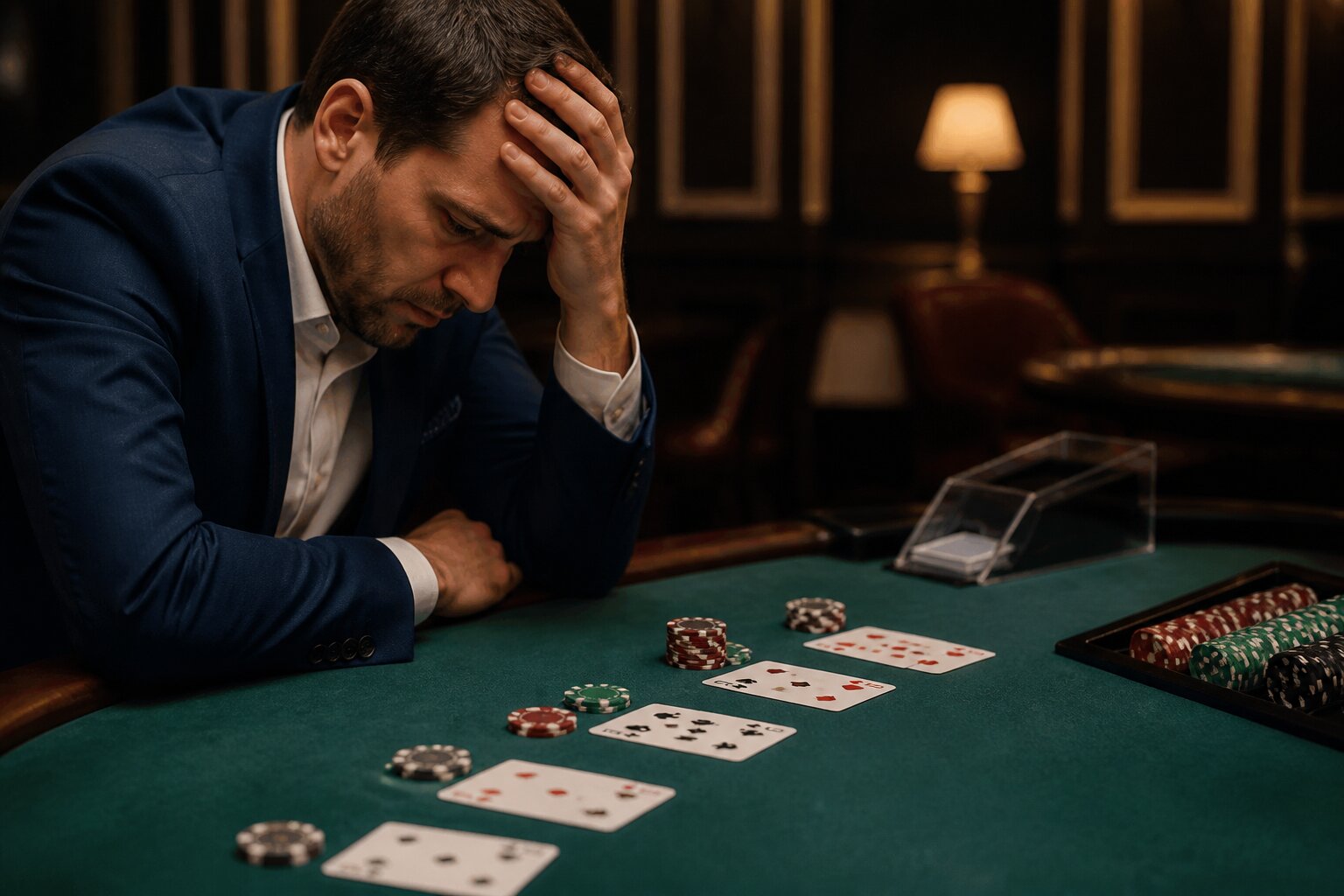
Ever found yourself on a losing streak at the blackjack table and wondered how unusual it really is? You’re not alone. Many players experience runs where outcomes seem to swing against them, and those stretches can feel frustrating and surprising.
Losing several blackjack hands in a row can look alarming, but it’s a natural consequence of probability and variance in card games. Read on to learn how likely long losing runs are, why they occur, and what that tells you about the game and sensible play.
How Probability Works in Blackjack
Grasping how probability operates in blackjack is the first step to making sense of winning and losing streaks. Each hand is resolved by the cards dealt, and every new deal is a fresh event: past results don’t alter the underlying maths that governs the next hand.
The number of decks in use affects distribution subtly. Single-deck games make card composition easier to track, while six- or eight-deck games reduce that visibility and slightly change outcome frequencies. Table rules — for example, whether the dealer hits or stands on soft 17, and whether doubling after splitting is allowed — also influence the house edge, which typically sits between 0.5% and 2% for a player using basic strategy.
On average, a player will lose, win, or push at different rates depending on rules and choices; a common long-term estimate is roughly 48% losses, 44% wins and the remainder pushes. That reflects the combination of dealer advantage and common player decisions under basic strategy. Understanding these baseline percentages sets up a clear way to calculate how likely repeated losses are, which is what we’ll cover next.
Calculating the Odds of Consecutive Losses
Working out the chances of losing several hands consecutively uses straightforward probability because each hand is independent. If the probability of losing one hand is 48% (0.48), the probability of losing two in a row is 0.48 times 0.48, and so on. Multiplying the single-hand probability by itself for each additional hand gives the odds for a streak.
For example:
- Losing two hands in a row: 0.48 × 0.48 = 0.2304 (23.04%)
- Losing three in a row: 0.48^3 ≈ 11.06%
- Losing five in a row: 0.48^5 ≈ 2.46%
These calculations are theoretical long-run figures based on the assumed per-hand loss rate. Real sessions can deviate from the long-term average, which means short runs of multiple losses are not uncommon. With those numbers in mind, the next section explores what such a streak means in practice for players at the table.
What Does a Losing Streak Really Mean?
A losing streak is simply a sequence of hands that end unfavourably for the player. It does not signal a change in the underlying odds or imply a flaw in the game's fairness. Even when every decision follows basic strategy, variance can produce runs of losses that feel disproportionate.
Players sometimes experience stretches of six or more losses in a row, and those runs can happen at any level of experience. The randomness built into dealing means both good and poor stretches will occur over time. Importantly, the probability for the next hand remains the same regardless of recent outcomes; the game does not compensate for past sequences.
Keeping perspective during these stretches helps avoid impulsive changes in betting. Instead of chasing back losses, maintaining predetermined limits and considering pauses can preserve the quality of play and bankroll management. The next section looks at how these patterns appear in real sessions and how they affect players.
Can Consecutive Losses Happen in Real Play?
Yes — consecutive losses occur regularly in real blackjack sessions. In a typical visit where a player plays 50 hands, runs of four, five or six losses at some point are entirely plausible given normal outcome distributions. It’s also common to see shorter losing runs multiple times within a single session.
Examples from play are straightforward: a player may start with a mix of wins and pushes, then go through a phase where several hands fall to the dealer despite correct basic-strategy choices. These stretches reflect natural variance rather than any malfunction in gameplay.
The emotional reaction to such stretches can be significant. Players might feel frustrated and tempted to increase bets to recover losses quickly. That response can lead to larger losses and reduced enjoyment, so many operators provide tools such as deposit or session limits and reminders to encourage controlled play. Recognising the emotional impact of streaks helps keep decisions steady and avoids escalation. With that in mind, it’s useful to clear up a few common misconceptions about blackjack odds.
Common Myths About Blackjack Odds
Many widely held beliefs about blackjack are inaccurate and can encourage risky choices. Separating myth from fact helps maintain realistic expectations and better decision-making at the table.
-
Myth: “I’m due a win after a losing streak.”
Fact: Each hand is an independent event; previous outcomes don’t change the mathematical chance of the next hand. -
Myth: “A winning system can beat the game every time.”
Fact: No betting system alters the house edge in the long run; short-term gains can occur, but they aren’t guaranteed. -
Myth: “The cards remember what happened before.”
Fact: Unless card counting is being used in a physical game, shuffles and multi-deck play mean prior deals don’t determine future ones. -
Myth: “If the table is hot, it will keep paying out.”
Fact: Streaks are a product of randomness and probability, not a predictive cue that outcomes will continue in one direction. -
Myth: “You can always spot when a dealer is due to bust.”
Fact: A dealer’s upcard and subsequent cards determine the chance of busting, not earlier hands.
Understanding these points reduces the temptation to make emotionally driven choices and promotes steadier play. With a realistic view of how outcomes unfold, players can focus on consistent decisions and sensible bankroll handling.
Losing several blackjack hands in a row is an expected outcome within the game’s probability structure: it may feel sharp when it happens, but it is part of the normal variation players encounter. Keeping measured expectations, using established strategy, and relying on preset limits will help maintain control and enjoyment over time.
Play Casino Games at Free Spins No Deposit Casino
We’d love to welcome you to our site, where you can relax and experience the excitement of casino games in a friendly environment. Whether you’re new or returning, our team is here to make sure you enjoy your time with us.
**The information provided in this blog is intended for educational purposes and should not be construed as betting advice or a guarantee of success. Always gamble responsibly.