
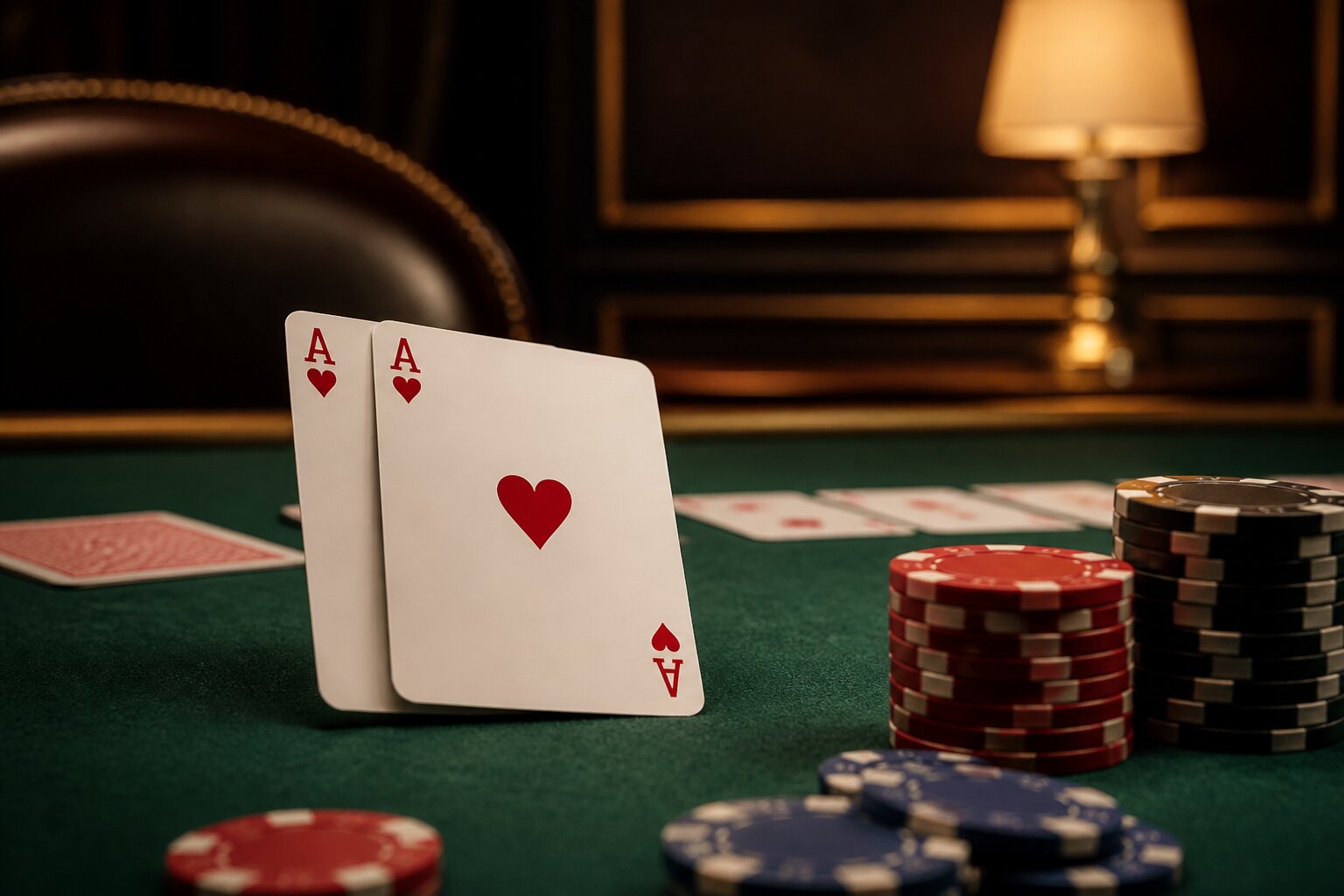
Every poker player gets excited when they’re dealt a pair of aces – but not everyone knows they’re fondly called “Pocket Rockets”.
Whether you’re a curious beginner or an experienced player, understanding why Pocket Rockets are so special adds a new layer of appreciation to the game.
This guide explains the name, the hand’s value, common myths and a few cultural moments that have helped make Pocket Rockets part of poker’s language.
What Are Pocket Rockets in Poker?
In poker, “Pocket Rockets” is a nickname for starting a hand with two aces as your hole cards. If your two private cards are both aces, that is Pocket Rockets.
This is the strongest possible starting hand in games such as Texas Hold’em because two aces form the highest pair before community cards are revealed. That makes them a powerful way to begin a hand, but not a guarantee of victory.
That strength is statistical rather than absolute. As the board unfolds and players make decisions, the hand’s prospects change. Factors that can reduce the relative strength of Pocket Rockets include:
- the community cards that appear on the flop, turn and river
- the number of opponents in the hand, with more players increasing the chance someone will beat you
- aggressive betting and strategic play from opponents that can force difficult decisions
Keep that context in mind as you read the rest of the guide. Understanding both the raw power and the limitations of Pocket Rockets will help you make better choices at the table.
Why Are They Called Pocket Rockets?
The nickname springs from a simple visual idea. The capital letter “A” is tall and pointed, and when two appear side by side they resemble a pair of rockets ready for launch. That visual metaphor is easy to picture and sticks in the mind.
Because these cards are dealt face down into a player’s hand, the word “pocket” is attached to the image, giving us “Pocket Rockets.” The phrase neatly combines where the cards sit with what they look like, making it a compact and memorable name.
The term also reflects the hand’s implied strength. Pocket aces are the best starting pair in Texas Hold’em, so the rocket image doubles as a hint at potential power without promising an outcome. Over time the nickname became common at tables and in poker culture, alongside other informal names like “American Airlines,” which players sometimes use for variety.
How Does the Hand Value of Pocket Rockets Compare to Other Starting Hands?
Pocket Rockets start the hand with the highest pre-flop value in Hold’em. No other two-card combination outranks a pair of aces before community cards are dealt. That advantage is purely statistical: aces give the best chance of winning at showdown before any cards are revealed.
Other strong starters include pairs of kings or queens, and high suited connectors such as ace-king. These hands can compete effectively in many situations, particularly when they connect with the community cards. Even so, they begin at a clear statistical disadvantage to aces and will often need to improve on the flop, turn or river to overtake pocket rockets.
How the hands compare is more about probability and context than certainty. Aces are favoured on average, but outcomes vary widely from hand to hand. The performance of any starting hand depends on a mix of factors, including:
- the texture of the board and how it develops,
- the number of opponents in the pot, which reduces single-opponent equity,
- table position and how the betting unfolds, since position affects information and pot odds.
Because of variance, even the best starting hand can lose, and lesser hands can win big. Successful play therefore combines statistical knowledge with good judgement about position, opponent tendencies and bet sizing.
When Do Pocket Rockets Gain or Lose Value During Play?
Pocket Rockets are most dominant pre-flop. As the flop, turn and river appear, their value responds to the texture of the board.
If the board is dry — few coordinated cards and limited suits — Pocket Rockets often remain favourites. If the board is wet — with possible straights or flushes — aces can be vulnerable, especially in multi-way pots where more opponents mean more chance someone will make a stronger hand.
Player count matters too. Against a single opponent, aces hold up better than they do against several rivals. How the betting is played can protect the hand or expose it, so reading the situation and opponents is crucial.
Do Pocket Rockets Have Any Myths or Misconceptions?
A common myth is that two aces guarantee a win. In truth, they are the best starting hand but not invincible. Strong hands can be outdrawn as more cards appear on the board, and the action factors such as number of opponents, bet sizing and position all change the real-world outcomes.
Another myth treats aces as somehow cursed. That idea comes from selective memory and table folklore rather than mathematics. Players tend to remember the dramatic defeats and forget the many times pocket aces hold, which creates a skewed impression of how often they actually lose.
If you are curious about specific scenarios, the math behind those frequencies is useful to study and helps separate fact from folklore. Useful scenarios to examine include:
- How often aces lose when called by a single opponent.
- How the chance of losing increases as more opponents remain in the pot.
- How different board textures, such as coordinated or paired boards, affect the likelihood of being outdrawn.
- How preflop actions like three-bets or limp-calls change the effective odds you face.
Studying these situations with simple probability or equity calculators will give you a clearer picture than repeating anecdotes. That knowledge helps you make better decisions at the table, such as when to protect your hand with aggressive betting and when to proceed cautiously because the board favours drawing hands.
What Are Common Terms and Nicknames for Pocket Rockets?
Pocket Rockets is often known by a few familiar alternatives used around the table. These names are part of poker slang and can vary by region and group.
- "Bullets" — a reference to the rounded, bullet-like appearance of the ace pip.
- "American Airlines" — comes from the visual of a double A, like the airline's initials.
- "Pocket Aces" — a straightforward, widely used term that leaves no room for confusion.
These nicknames add colour to the table and help players communicate quickly about what they’ve been dealt. They are informal terms used for convenience and camaraderie; remember to play responsibly.
Pocket Rockets in Popular Culture and Poker Lore
Pocket Rockets feature regularly in film, television and tournament commentary, often used to create tension or mark an important decision.
In film and TV, they can signal a turning point in a scene, leading to dramatic showdowns or surprising losses. In real poker history, notable hands beginning with Pocket Rockets are replayed and analysed, sometimes for the play that followed rather than the initial deal.
The nickname has become part of everyday poker talk and helps connect casual players with the game’s wider culture. Though well known, Pocket Rockets remain one element among many in poker’s mix of probability, skill and psychology.
**The information provided in this blog is intended for educational purposes and should not be construed as betting advice or a guarantee of success. Always gamble responsibly.