
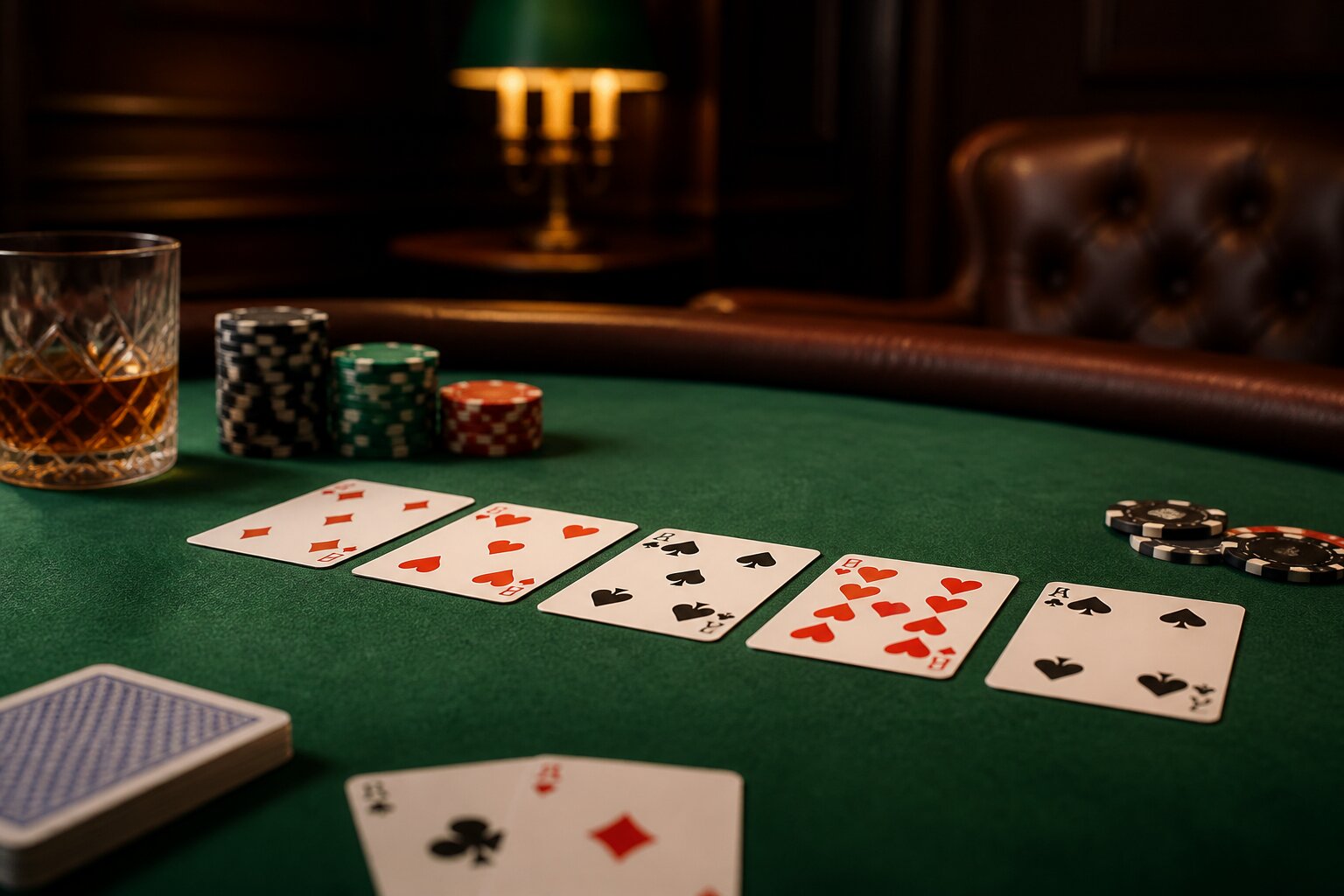
Ever been in a hand of poker and heard someone shout, “That’s a complete brick!”? If that phrase has left you puzzled, you’re not alone. Poker has its own vocabulary, and understanding terms like brick can sharpen how you interpret a hand.
A brick can change the course of a round in subtle ways. Read on to learn what a brick is, how to spot one, and how it can shape betting and strategy without repeating the same points over and over.
If you play with limits in mind and keep a clear head, knowing about bricks will help you make clearer choices at the table.
What Is a Brick in Poker?
A brick is simply a card that does not improve any meaningful hand or draw on the board. It’s the sort of card that arrives and leaves the overall situation effectively unchanged.
Imagine you hold two hearts and there are already two hearts on the board, so a third heart would complete a flush. If the next card is a two of clubs, that club is a brick in this context because it neither completes the flush nor otherwise advances a likely strong hand. Bricks are commonly discussed on the turn and river in Texas Hold’em when players are hoping for a finishing card.
Understanding what counts as a brick depends on reading the board texture and the likely hands in play. A card that is irrelevant in one situation might be useful in another, so recognising the context is essential.
Understanding the Origin of the Term ‘Brick’
The word brick in poker draws on ordinary language where a brick represents something solid and unchanging. In cardplay, a brick sits on the board without shifting the contest between players.
This metaphor took hold because players needed a simple way to describe cards that effectively end a series of potential improvements. Over time it has become a standard term used in both live and online play across variants such as Texas Hold’em and Omaha.
Knowing the origin helps make the term easy to remember, but what matters most at the table is recognising when a card is functionally inert for most likely hands.
How Do Brick Cards Affect the Progression of a Poker Hand?
A brick can alter the tempo and choices in a hand, especially late in the betting. When a brick appears on the turn or river, common draws fail to materialise and the existing strengths of hands usually remain unchanged.
For example, if a board offers a possible flush and the river is a low off-suit card, those chasing the flush have missed. That can cause them to check or fold, while a player who already held the best hand may opt to bet for value or simply protect a stack. Conversely, a brick can induce bluffing opportunities: someone who had folded may re-enter with a strong read that the board is safe.
The real impact of a brick depends on factors such as stack sizes, position, and how players have been betting. It’s a signal rather than a verdict; interpreting it well is part of sound game-reading.
Common Scenarios Where a Card Bricks
Cards are commonly labelled bricks in situations where players are waiting for a specific rank or suit. Typical scenarios include straight and flush draws that don’t complete, and final cards that add no new pairs or suit threats to the board.
For example, when players are one card short of a straight and the next card is far removed from the needed sequence, many will see it as a brick. Likewise, when the board shows potential for a full house or flush and the last card is a low, unrelated off-suit card, that final card is often treated as a brick.
These moments matter because they often decide whether a player keeps investing in the pot or withdraws. Recognising the patterns that make a card a brick helps you better judge opponents’ likely actions.
Now that you can identify common brick situations, the next section explains how bricking can be good or bad depending on your hand.
Is Bricking Always Bad in Poker?
Bricking is not inherently bad; its value depends on who benefits from the status quo on the board. If you were hoping to hit a draw, a brick is a missed opportunity. But if you already had the best hand, a brick can be helpful by stopping opponents from improving.
Consider a player with top pair who sees a brick on the river. That player may feel more comfortable calling or betting because the board hasn’t suddenly created new threats. At the same time, a brick can make bluffing more attractive for someone who senses weakness.
Context — such as position, bet sizing, and previous action — determines whether a brick favours you or your opponent, so treat each occurrence as new information to be weighed rather than a fixed outcome.
How to Recognise a Brick on the Flop, Turn, or River?
Spotting a brick means looking at what hands are plausible and whether the incoming card helps any of them. On the flop you assess how many draws the community cards present; the turn and river narrow possibilities further.
If the turn or river is off-suit and outside the range needed for straights or flushes suggested by the board, it is often a brick. For instance, with 10♠, J♠, Q♠ on the board, a 2♦ on the turn typically adds nothing to main draws and is therefore a brick. Similarly, a card lower than all others on the board that does not pair the board rarely changes anything.
Recognising a brick includes reading opponents’ betting patterns. If a player has been chasing and suddenly checks after the brick, that behaviour may confirm they missed. Use these behavioural clues alongside the board texture to make better-informed decisions.
Busting Myths: Are Brick Cards Always Unlucky?
A brick is not intrinsically unlucky. It simply means the board has not shifted in a way that helps most visible draws. Depending on your hand and how the action has unfolded, a brick can be neutral, beneficial, or disadvantageous.
Focus on how the card alters the likely ranges of other players rather than treating it as a good or bad omen. That approach keeps your decision-making grounded and practical.
When you’re ready, the following section covers how bricks influence betting choices and pot dynamics.
The Importance of Brick Cards in Poker Betting Decisions
Brick cards frequently shape betting strategy because they change the perceived strength of hands at the table. When a draw misses, opponents may become less inclined to commit chips, and those ahead can exploit that by extracting value or by slowing down to avoid unnecessary risk.
For instance, if an opponent has been representing a draw and a brick arrives, they may check to avoid a big call. Conversely, a player holding a made hand might bet modestly to protect their lead or apply pressure if the pot size warrants it. Stack depth and position also influence whether a brick encourages folds, calls, or bluffs.
Rather than seeing a brick as a single deciding factor, treat it as one piece of information that informs whether to press an advantage, conserve chips, or try a well-timed bluff. Balancing aggression and caution around these moments is where experienced play often separates itself.
Brick Card Examples Across Different Poker Variants
Bricks appear in all poker variants, but their significance changes with each format. In Texas Hold’em, a common situation is missing a suited card on the river when you were drawing to a flush; that river then functions as a brick. In Omaha, with more hole cards and more possible combinations, low off-suit cards often serve as bricks because many potential draws remain unmet. Even in stud games, a card that does not fit likely patterns can be treated as a brick.
Each variant demands attention to different details. In Hold’em, fewer hole cards make board reading central. In Omaha, the abundance of combinations makes it crucial to track suits and connectivity. Across variants, the same principle applies: a brick is determined by what it fails to accomplish relative to the game's state.
Take these differences into account when moving between game types, as your read on a brick in one format may not translate directly to another.
Frequently Asked Questions About Poker Bricks
Players often want clear answers about how bricks show up in specific games and what they mean in practice. Below are concise explanations to common questions.
What Is a Brick Card in Texas Hold’em?
In Texas Hold’em, a brick is a card that does not complete likely draws or change the relative hand strengths on the board. For example, with 9♥, 10♥, 4♦ on the flop, a turn of 2♣ that does not fit existing draws would be considered a brick.
What Does a Brick Look Like in Omaha?
Omaha features four hole cards and therefore many more potential draws. A low, off-suit card on the river that does not form straights, flushes, or pairs relevant to the board is typically treated as a brick in this variant.
Can Brick Cards Show Up in Other Poker Games?
Yes. In stud or draw formats, any card that does not connect to likely hands or draws is a brick. The key is always the relationship between the card and the plausible combinations players could hold.
If you want to sharpen your play, pay attention to how bricks affect opponents’ behaviour and use that to refine your reads. And remember — set limits and manage your play responsibly so the game stays enjoyable.
**The information provided in this blog is intended for educational purposes and should not be construed as betting advice or a guarantee of success. Always gamble responsibly.