
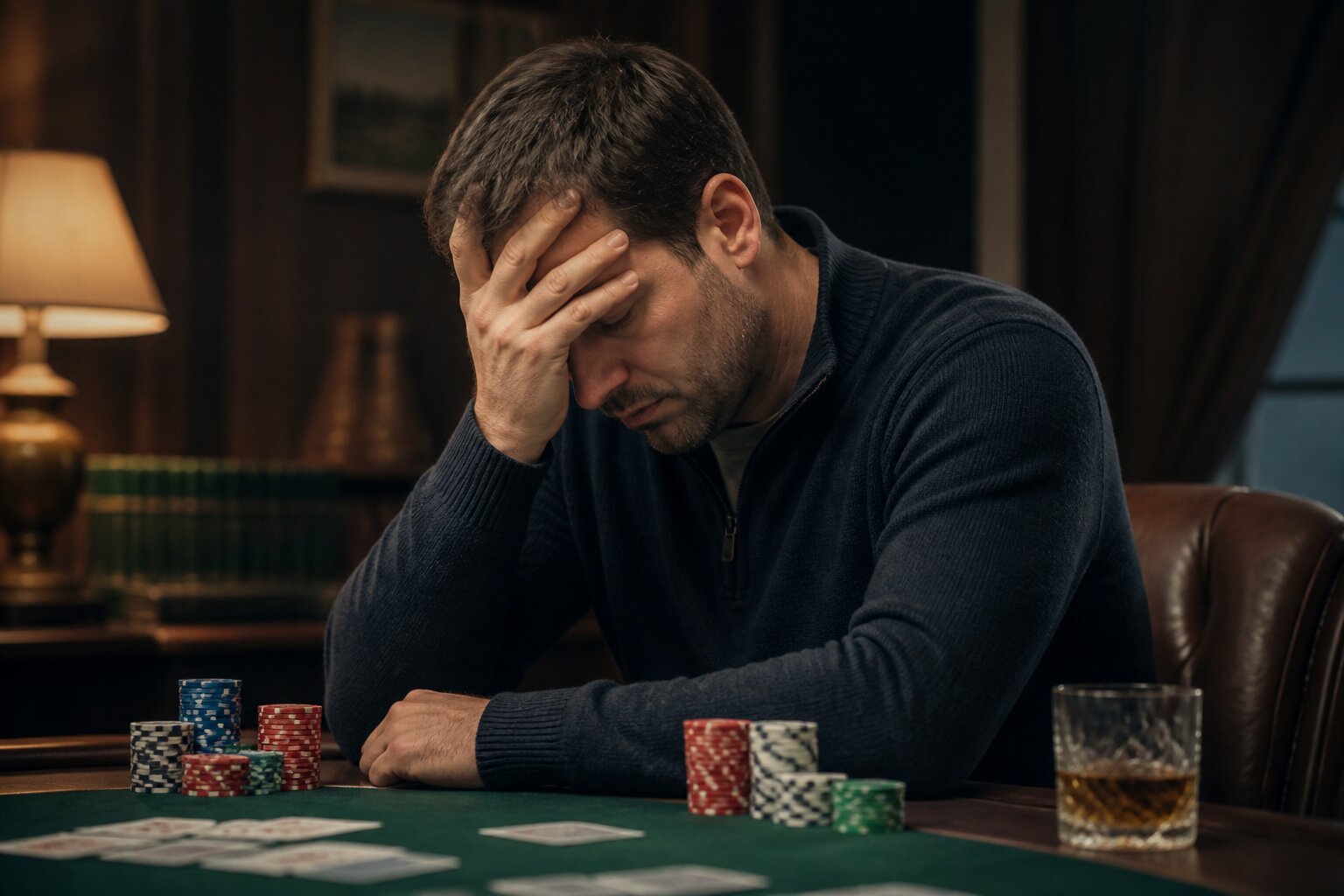
Every poker player, from beginners to seasoned pros, hits rough patches when results slip and confidence dips. These stretches can make decision-making feel harder and take some of the enjoyment out of the game.
If you want to understand why downswings happen, how to respond constructively, and how to protect your wellbeing while playing, this guide walks through the practical ideas and support options that help players regain control and perspective.
What Is a Poker Downswing?
A poker downswing is a period when your results decline over a number of sessions, even though your choices at the table remain sound. It isn’t a sign of failure as much as it is part of the statistical variation inherent in card games: outcomes cluster, and sometimes those clusters include a lot of losses.
A useful way to think about it is in terms of probability and sample size. Over a small number of hands, short-term fluctuations can dominate; over larger samples, skill tends to assert itself more clearly. That’s why evaluating performance across many sessions, rather than a handful of poor ones, gives a clearer picture of where you stand.
If poker stops being enjoyable or starts causing persistent stress, stepping back and reassessing priorities is sensible. Play should be managed within your limits, and keeping the activity firmly in the realm of entertainment helps protect both your wallet and your wellbeing.
Common Causes of Poker Downswings
Downswings usually result from a mix of factors rather than a single cause.
Variance in outcomes explains much of the movement in results: favourable and unfavourable sequences of hands will occur naturally. Equally, non-variance factors can drive a downturn. Decision errors creep in when you’re tired, distracted, or emotionally unsettled, and they affect long-run results if they persist. Changing the stakes or format without adjusting strategy can also introduce swings, because the game dynamics and opponent tendencies differ at different levels.
Finally, bankroll management plays a role. Playing at stakes that expose a large proportion of your bankroll to single sessions increases the chance of significant downswings. Balancing stake choice with your financial comfort is an important defensive measure.
How Can You Tell If You Are in a Downswing?
Recognising a downswing means looking beyond a single bad night. Key indicators include a sustained downward trend in your bankroll across multiple sessions, and a pattern of results that doesn’t match the quality of your decisions when reviewed objectively.
Emotional signs can offer an early warning: persistent frustration, a feeling that outcomes are consistently unfair, or a slipping appetite for analysis and improvement. If you find yourself tempted to change stakes impulsively or pursue bigger gambles to recover losses, that shift in behaviour suggests the situation warrants attention.
Keeping session notes, saving hand histories and tracking key metrics over time helps to separate temporary noise from meaningful trends. These records let you judge whether adjustments in strategy or stakes are needed, or whether you’re simply experiencing a statistical down period.
The Emotional Impact of Poker Downswings
A prolonged period of poor results can affect mood and self-confidence, and may spill into everyday life. Players commonly report a range of reactions that can make both the game and daily routines harder to manage:
- frustration and irritability
- increased self-doubt about decisions and ability
- difficulty concentrating or making clear choices
- altered sleep patterns, loss of appetite or overeating
These responses are understandable when something you care about is not going well. Recognising the feelings and giving yourself permission to step back are important first steps. Pausing play for a few sessions can help you regain perspective, avoid tilt and prevent short-term losses from compounding.
Talking with friends, family or other players who understand the game can normalise the experience and reduce isolation. Practical, low-cost steps that many players find useful include:
- keeping a regular daily routine to protect sleep and mood
- setting limits on session length and stakes to reduce stress
- reviewing hands and decisions calmly away from the table to focus on learning
- taking short breaks during sessions to reset emotionally
- practising simple stress-management techniques such as breathing exercises or brief walks
If negative feelings persist or begin to interfere with work, relationships or daily functioning, seeking professional help is a sensible step. A qualified counsellor or therapist can offer strategies to manage anxiety and low mood, while your GP can advise on further support if needed. If you ever feel overwhelmed or at risk, contact local emergency services or a crisis helpline immediately.
How to Recover from a Downswing?
Practical Tips for Managing a Downswing
Recovery tends to come from steady, measured responses rather than dramatic moves. Re-establishing routines that support clear thinking and disciplined play will usually beat impulsive attempts to force a change in results.
Start by reviewing your bankroll approach and confirm that your stakes match your financial comfort. Taking short breaks can reset your perspective; even a pause of a few days allows emotions to cool and reduces the risk of tilt-driven mistakes. When you return, focus on process over outcomes—evaluate decisions, not just whether a hand won or lost.
Keeping a concise log of key hands and patterns helps reveal whether any leaks in your game have developed. And discussing hands with trusted peers or coaches can provide fresh angles and prevent tunnel vision.
Using account controls or taking a longer timeout is appropriate when play begins to feel compulsive. These measures are tools to protect your wider wellbeing and can be used without stigma.
The Link Between Downswings and Mental Health
Extended poor results can erode confidence and increase stress. For some players that leads to anxiety, low mood, or withdrawal from social activities. The overlap between problematic play and mental health problems is real: where gambling behaviour begins to cause ongoing distress, early intervention matters.
Maintaining routines outside poker—sleep, exercise, social contact and hobbies—helps stabilise mood and cognitive function. If symptoms persist, professional mental health support is available through national services and charities. Reaching out early is a practical move, not an admission of failure.
If you notice worrying changes in behaviour or find it difficult to stop playing despite negative consequences, trusted support services can advise on next steps and treatment options tailored to your situation.
Myths About Poker Downswings
Several persistent myths obscure sensible responses to downswings. One is that a downswing always means you are playing badly—when in many cases the pattern reflects normal statistical variation combined with occasional errors. Another is that increasing bet size will quickly erase a losing run; in practice this often increases volatility and risk to your bankroll. The idea that recent results influence future independent hands is also mistaken: each hand’s outcome follows the game’s probability structure rather than any sense of being “due.”
Finally, expecting every player to react the same way ignores personal differences in temperament, goals and bankrolls. What helps one player recover—slowing down, studying, or changing stakes—may not be the best route for another. Finding the approach that fits your situation and values is the practical path forward.
Where Can Poker Players Find Mental Health Support?
If poker is causing significant worry or distress, there are confidential sources of help and information available across the UK. Reaching out is a constructive step and resources exist to provide immediate advice, longer-term support and referrals to local services.
- GamCare offers information, advice and support for people affected by gambling harms, including chat and helplines.
- The National Gambling Helpline provides free, confidential advice and operates around the clock.
- The NHS gives information on how to access treatment for gambling-related problems and local mental health services.
- Mind provides guidance and support for a range of mental health difficulties, with resources to help you find further assistance.
If you need a break from play, tools such as deposit limits or temporary self-exclusion are available and can be set up to protect your wellbeing. Taking action early keeps options open and supports a healthier relationship with the game.
Play with care, focus on steady improvement, and look after yourself off the table as well as on it.
**The information provided in this blog is intended for educational purposes and should not be construed as betting advice or a guarantee of success. Always gamble responsibly.