
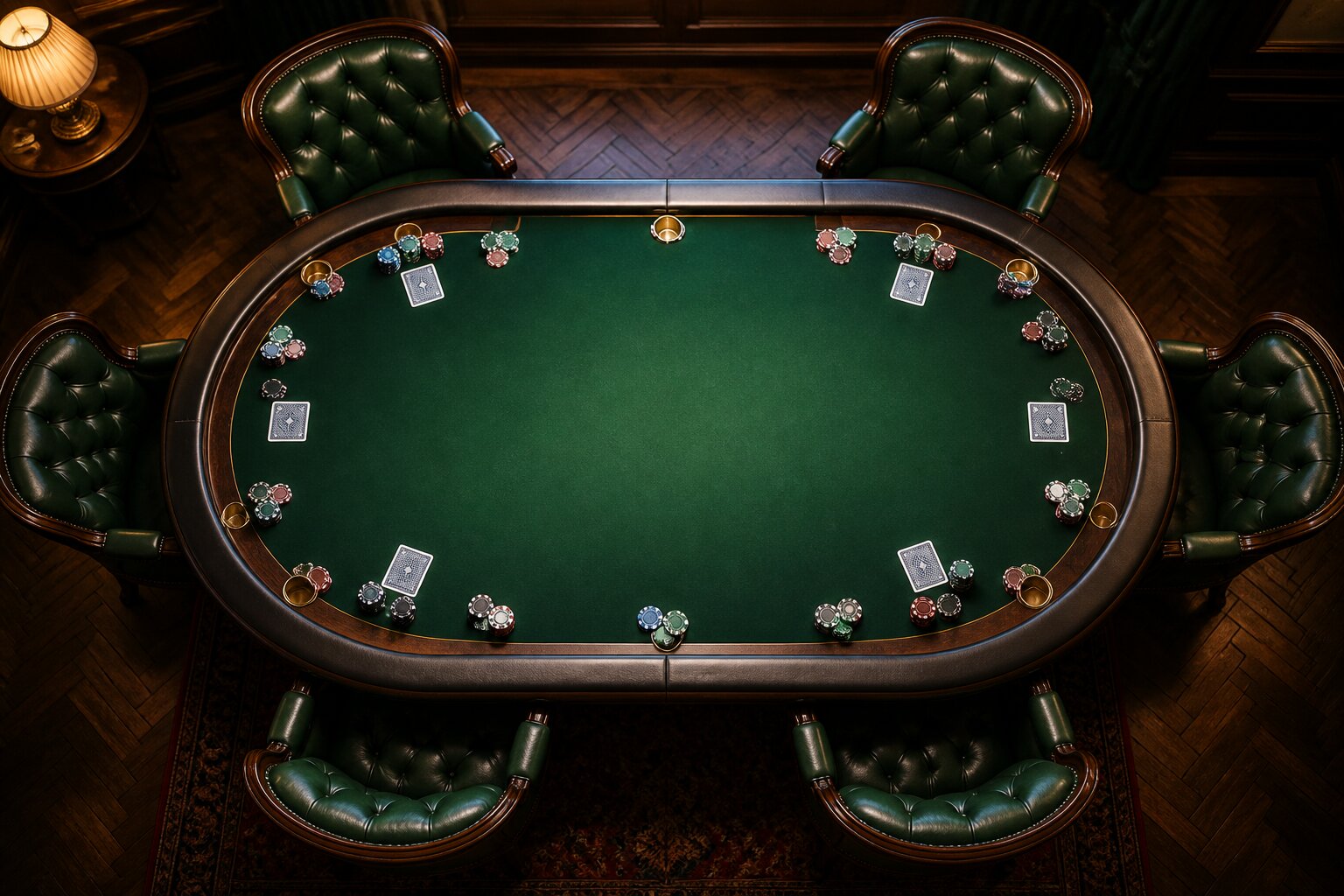
If you’re keen to improve your poker skills, understanding table positions is a must. Where you sit around the poker table affects your information and the choices you make during a hand.
With names like “button”, “cut-off” and “under the gun”, the terminology can feel strange at first. This guide explains each position clearly, with practical context so you can put the ideas to use straight away.
Ready to sharpen your play? Let’s get started.
What Are Poker Table Positions?
Poker table positions are simply the seats around the table and the order in which players act during a hand. Each seat has a name so everyone can follow who acts first, who acts last and how the betting progresses.
These names make it easy to describe the sequence of play and to plan tactics based on when you’ll have to make decisions. Knowing the positions is part of playing with awareness and helps you read the action more effectively.
If you’re new to live or online poker, paying attention to positions will quickly make the game easier to follow and discuss with other players.
Why Does Position Matter in Poker?
Your position tells you whether you act early or late in each betting round. Acting later gives you more information about opponents’ choices before you decide. Acting early means you must choose with less information.
That difference alters how aggressively or cautiously you might play certain hands. For example, hands that are marginal from an early seat can be playable from late seats because you can react to others first. Playing late also makes it easier to bluff or to control the size of the pot, since you can see opponents’ intentions before committing more chips.
Position is a strategic tool: it does not change the cards you are dealt, but it affects how you handle them and how you respond to other players’ actions. Being aware of position helps with choices such as raising, calling, folding and when to apply pressure.
Play within your limits and gamble responsibly.
Overview of Common Poker Position Names
Below are the most common position names you’ll see at any poker table, with brief descriptions to set the scene.
- Dealer/Button: Usually marked with a disc; represents the notional dealer for that hand and rotates clockwise after each hand.
- Small Blind: The player immediately left of the button who posts a smaller forced bet.
- Big Blind: The next player left of the small blind who posts a larger forced bet.
- Under the Gun (UTG): The seat immediately left of the big blind; first to act in most preflop rounds.
- Middle Position: Seats following UTG; they act after early positions but before late positions.
- Cut-Off: The seat immediately to the right of the button; acts just before the dealer.
These terms apply in both cash games and tournaments and allow players to communicate about play and strategy in a common language.
Early, Middle, and Late Positions: What’s the Difference?
The table is often grouped into early, middle and late zones to highlight the order of action.
Early positions include the blinds and UTG and are the first to act. Because these seats decide before seeing others’ choices, they generally play more conservatively.
Middle positions come next and can widen the range of hands a player might play, since they see some of the action in front of them.
Late positions, such as the cut-off and button, act last and can exploit the extra information to make more informed decisions and apply pressure when appropriate.
Understanding these zones helps you judge which hands are reasonable to play from each seat and how to adjust when the table dynamics change.
The Dealer Button: How Does It Affect Play?
The dealer button marks the notional dealer and shows who will act last on most betting rounds. It moves one seat clockwise after each hand so everyone rotates through different positions over time. This rotation means every player will experience early, middle and late positions, with different strategic implications for each.
Because the button gets the final say in post-flop betting rounds, it is often seen as an advantageous seat for gaining extra information before making a decision. From the button you can observe how opponents act before you commit chips, which can influence whether you choose to bet, call or fold.
The button also determines who posts the blinds for the following hand, which affects how the pot is seeded and the initial incentives for action. Understanding this helps you read the table dynamics and adjust your play accordingly.
Keeping track of the button helps you anticipate how the action will flow and positions you to exploit opportunities when others reveal their intentions first. In practice this means you can:
- plan whether to play more hands from late position where you have information advantage
- target weaker players or predictable bets when you act after them, while remaining aware of increased variance
Always remember that positional advantage is only one factor among many, and skillful play requires combining it with sound risk management and knowledge of opponents.
What Are Blinds and How Do They Work in Poker?
Blinds are forced bets that seed the pot and encourage action. The small blind and big blind are posted by the two players to the left of the button before the cards are dealt; the big blind is usually twice the small blind.
These mandatory bets set the minimum amount for betting and raising in the early rounds and rotate around the table with the button. Because players in the blind positions act early, they must account for the fact they will be required to act before others in many rounds.
Blinds ensure there is always something to play for and help define how aggressive or defensive players might be from particular seats.
Which Poker Position Is Best?
No single position is objectively the best in every circumstance. Each seat brings different informational advantages and constraints that interact with the cards dealt and the opponents at the table.
Late seats generally offer more strategic options because of the extra information gained from earlier actions. From late position you can widen your opening range, attempt more steals of the blinds, and apply pressure with well-timed bets. Early seats require a tighter approach since you act before others and must be more cautious about speculative hands.
However, several common factors can change the relative value of any seat:
- Table composition
- Stack sizes
- Opponent tendencies
Adjusting how you play based on these factors will often be more profitable than trying to secure a single "best" seat. Stay aware of position throughout a session and shift your strategy accordingly to make better decisions over time.
Myths About Poker Table Positions
There are several persistent myths worth dispelling. Common false beliefs include:
- That a particular seat guarantees success; no seat can overcome poor play, bad decisions, or consistently stronger opponents. Skill and decision-making remain decisive.
- That simply rotating seats will change outcomes; changing where you sit only alters when you act in the betting round, not the underlying quality of your play or the cards you receive.
- That position alone can substitute for sound strategy; relying on seat alone encourages neglect of hand selection, pot control, and reading opponents.
Believing in quick fixes linked to position can encourage misleading thinking about overall strategy and lead players to overvalue small advantages.
Instead, focus on how position affects available information and how that should influence the hands you choose to play and the level of aggression you apply. Use position as one tool among many: adjust opening ranges, bet sizing and frequency based on your place in the betting order, and combine positional awareness with solid fundamentals and attention to opponents' tendencies.
How to Identify Your Position at the Table
Spotting your position in a live game starts with locating the dealer button. That button marks where the deal begins for each hand and moves one seat clockwise after every hand. Once you have the button in view, count clockwise to work out each seat.
- The next seat is the small blind.
- After that comes the big blind.
- Then come the early positions, starting with under the gun (UTG).
- These are followed by middle positions.
- Finally you have the late positions, including the button itself.
Online games typically label your position automatically, which makes it quicker to see whether you are in an early, middle or late seat for each hand. The software will often show tags or highlight your seat so you can focus on the cards and action.
Being able to identify your seat quickly helps you make faster, more considered decisions at the table. Position affects how many players act after you and the range of hands you should play, so recognising it is a basic but important part of sound tablecraft. Remember to play responsibly and within your limits.
Glossary of Poker Table Positions
This glossary explains the main position names so you can refer back when you need to.
Dealer/Button
A rotating marker indicating the notional dealer for the hand; it determines the order of play and who posts the blinds next.
Small Blind
The seat immediately left of the button, posting a smaller mandatory bet before the cards are dealt.
Big Blind
The seat left of the small blind, posting a larger mandatory bet that sets the initial stakes for the hand.
Under the Gun (UTG)
The first player to act in the preflop round, found immediately left of the big blind.
Middle Position
Seats that act after the early positions but before the later ones; they often balance caution with wider hand selection.
Cut-Off
The seat immediately to the right of the button that acts just before the dealer and can seize opportunities to apply pressure.
Each term helps players track the flow of a hand and make informed choices at the table.
If you want, I can tailor this guide for a specific format—online cash games, short-handed tables or tournament play—so the position advice matches the environment you play most.
**The information provided in this blog is intended for educational purposes and should not be construed as betting advice or a guarantee of success. Always gamble responsibly.