
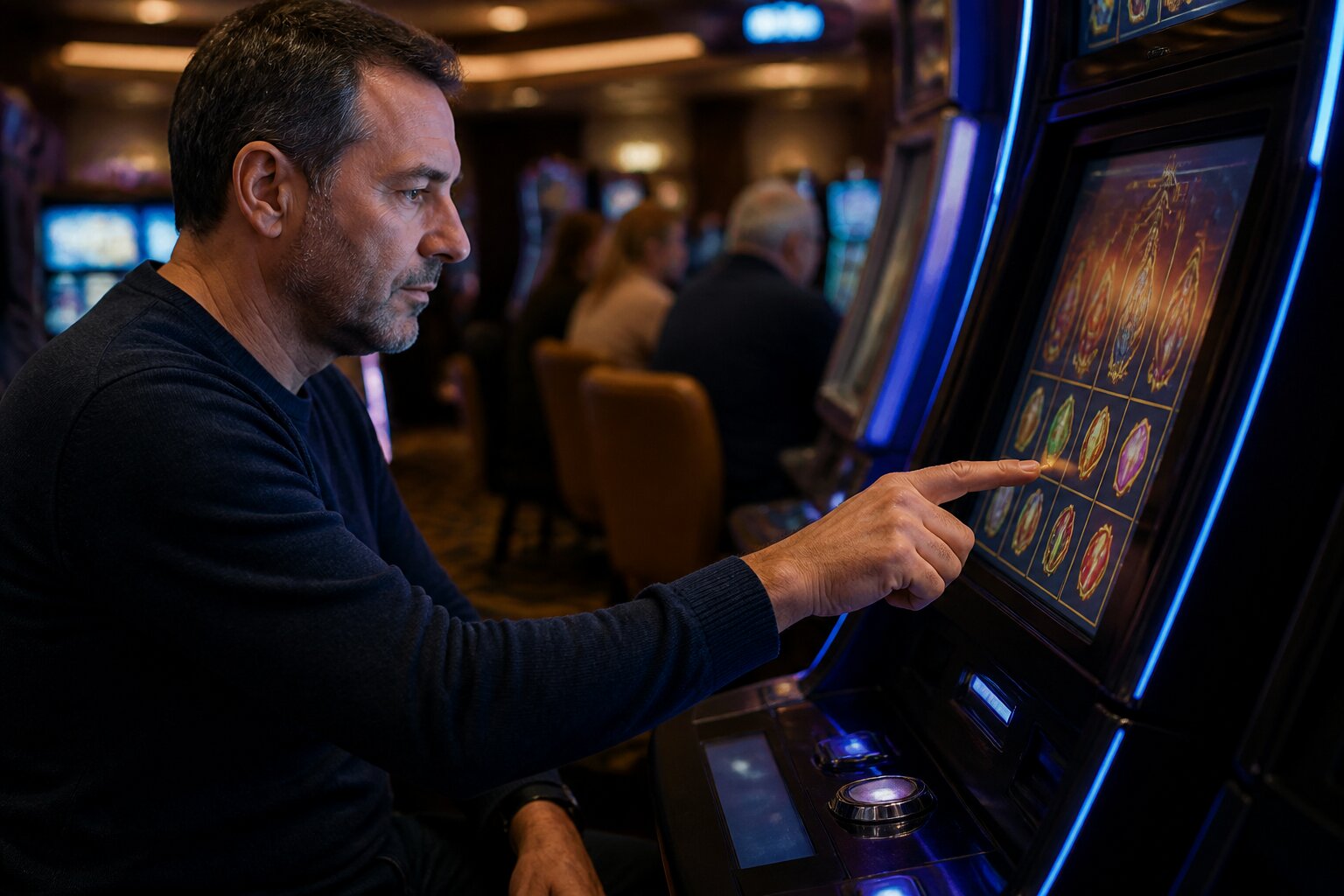
Ever noticed someone tapping or drumming their fingers on a slot machine screen and wondered why? Whether you’re a keen slots player or a casual observer, this behaviour appears commonly in both land-based casinos and online games.
It can look like a ritual, a nervous tick, or just part of interacting with a touchscreen. There’s more behind those taps than meets the eye, and understanding the reasons helps explain how players engage with machines and why these gestures persist.
Curious about what’s really going on? Read on to explore the psychology, design and practical facts that shape tapping behaviour—and what it reveals about how people play.
Understanding Slot Machine Interactions: The Basics
Slot machines now let players interact in different ways: older machines used levers and buttons, and modern versions use touch screens and software controls. Tapping the screen is simply one of several ways people start spins, adjust bets or trigger features.
Crucially, the result of a spin is determined by a Random Number Generator (RNG), a certified system that decides outcomes independently of how a player touches the machine. That decision is made at the moment of initiating the spin, so the screens, animations and sounds you see afterwards do not change the already-set result.
While tapping is a normal input method and can feel satisfying, it does not alter odds or influence the RNG. Keeping that distinction in mind helps separate the interactive experience from the technical reality of how games operate.
Is There Any Logic Behind Tapping Slot Machine Screens?
People adopt tapping habits for several practical reasons. For touchscreen machines, tapping is the natural way to interact: it is quick, precise and gives immediate feedback. Players also tap while waiting for on-screen animations or bonus features because it keeps their hands engaged and the experience feeling active.
Some players believe their actions might affect outcomes, but there is no technical mechanism in modern games for touch patterns to change a result. In short, tapping has behavioural or ergonomic logic rather than any influence on the game’s underlying systems.
Understanding this helps you see tapping as part of a player’s routine, rather than a technique to improve returns.
Common Misconceptions About Tapping Slot Machines
A number of myths circulate about tapping and other player gestures. Players sometimes assume a specific movement or tap will influence the game, but those ideas do not match how regulated slot machines work.
Two common misconceptions are:
- certain taps can “nudge” reels or trigger better payouts, and
- machines somehow read touch intensity or rhythm and respond differently.
Both ideas misunderstand how contemporary gaming software is built and regulated. The outcome of each spin is determined by a random number generator, and tactile input functions only as a user interface command, not as an input to the outcome calculation.
RNG systems, independent testing and regulatory oversight help make this clear. Licensed machines are subject to certification and regular audits to ensure that gameplay and payout percentages cannot be altered by player gestures. In other words, tapping controls the device in the same way pressing a button does: it starts or stops features but does not change the underlying odds.
Spotting these misconceptions is useful because it makes play more transparent and helps players keep the focus on enjoyment rather than incorrect beliefs. Understanding how the technology and regulation work can lead to more informed and responsible play.
Is Tapping a Sign of Superstition or Habit?
For many, tapping is simply part of their personal ritual. These small routines can feel comforting and familiar while playing, helping people settle into the activity and focus on the game.
Examples of these routines include:
- repeating a particular movement,
- choosing the same bet size,
- tapping a certain area of the screen or table.
That does not make them harmful by default, but it does help explain why the behaviour persists. Habits form because certain actions are repeated in similar situations, and the brain learns to expect them. Over time the action can become automatic, performed with little conscious thought.
Where it matters is if the routine becomes automatic and tied to increased play or spending. If the habit drives longer sessions, larger stakes, or makes it harder to stop, it may be worth pausing to reflect on play patterns. Practical steps to keep gaming enjoyable include setting time and money limits, taking regular breaks, and checking in on how often and why you are playing.
If you find it difficult to control play or are worried about the impact on your life, consider speaking to a friend, contacting support services, or using responsible gambling tools provided by operators. Taking a moment to reflect can help keep play safe and enjoyable.
The Role of Psychology in Player Actions
Designers use visual and audio cues to shape the playing experience because people respond strongly to sensory stimuli. Bright symbols, celebratory sounds and animated sequences are crafted to create moments of excitement and keep attention on the game.
These elements can make wins feel more significant and stretches of play more engaging. That psychological pull helps explain why players stay involved and may adopt small physical behaviours, such as tapping, to mirror the energy of the game. Recognising these design choices can make it easier to be mindful about how much time and money you spend.
If you notice you're playing longer than intended, checking how sensory cues affect you can be a practical step towards maintaining control.
How Do Visual and Audio Effects Influence Behaviour?
Research shows that audiovisual feedback increases engagement by creating immediate, memorable responses. A flashing LED and a short victory tune register quickly in the brain and encourage players to continue interacting with the machine.
These cues are deliberately part of the entertainment package and do not change the game’s technical fairness. Understanding their role helps separate the emotional reaction they provoke from the mechanics that actually govern outcomes.
Does Touch Screen Technology Affect Player Engagement?
Touch screens change the relationship between the player and the game. The tactile action of tapping or swiping makes the experience feel more hands-on compared with pressing large physical buttons, and that can increase immersion. Haptic feedback and responsive animations can amplify that sense of contact, making the game feel more immediate and personally controlled.
Touch interfaces also allow for more varied game features, such as touch-selectable bonus choices or interactive mini-games, which extend the types of engagement available. These features can add layers of decision-making and visual interaction that keep sessions feeling fresh and engaging.
These design choices make games more interactive, but the element of chance remains governed by the game’s random number generator (RNG). In other words, added interactivity changes how players experience a game, not the underlying odds or fairness.
Understanding this balance between interactivity and technical fairness helps players appreciate the added features without assuming they change the probabilities of outcomes. It is sensible to enjoy the enhanced interaction while remembering that gameplay results are still determined by chance.
Industry Insights: What Do Casino Operators Say?
Operators recognise that tapping and other small routines are part of normal player behaviour. From their perspective, these actions are user interactions with the machine rather than inputs that affect fairness or results. They stress that such behaviours do not change the underlying mechanics or random outcomes of the games.
Operators follow regulatory standards, independent testing and ongoing audits to ensure games are fair and operate as intended. Licensed operators point to:
- use of certified random number generators and regular third-party testing,
- transparent rules and published return-to-player figures where required by regulators,
- compliance with licensing conditions and inspection regimes.
Many operators also provide tools that encourage balanced play and help people stay in control. Typical measures include:
- session reminders and time alerts,
- configurable spend and loss limits,
- self-exclusion options and cooling-off periods,
- access to information about safer play and links to support services.
This combination of regulated fairness and player-centred tools reflects the industry’s practical approach to both entertainment and protection. Operators position these measures as part of their duty of care to customers and as a means to promote safer, more sustainable play.
Should You Be Concerned About Tapping Behaviours?
Tapping alone is normally harmless and is often part of how players personalise their experience. It becomes worth monitoring when the same habit starts to coincide with playing for longer or spending more than you intended.
Practical steps you can try include:
- Setting affordable limits on time and money to keep play within your budget.
- Checking your play history regularly to spot changes in frequency or spending.
- Taking regular breaks if play feels automatic or you are not fully aware of what you are doing.
If tapping is linked to anxiety, restlessness or a sense of compulsion, consider seeking guidance from specialised support services. These services can offer confidential advice, practical coping strategies, and signposting to further help such as self-exclusion or time-out tools if appropriate.
If you would like to explore support options, BeGambleAware provides information and resources to help people manage their play responsibly, including details of confidential helplines and online support.
Key Takeaways on Slot Machine Tapping
Tapping on slot machine screens is a common, mostly harmless way players interact with games. It can reflect habit, comfort with touch interfaces, or a reaction to a game’s sensory design.
- Tapping makes the experience feel interactive but does not change how outcomes are determined.
- Visuals, sounds and touch controls increase engagement without altering fairness.
- Monitoring play patterns and using available controls helps keep gaming enjoyable and sustainable.
We aim to provide fair, transparent games and tools that support players. If you want a clearer picture of how our games work or how to manage your play, the support and information we offer are there to help you stay in control and enjoy the experience.
**The information provided in this blog is intended for educational purposes and should not be construed as betting advice or a guarantee of success. Always gamble responsibly.