
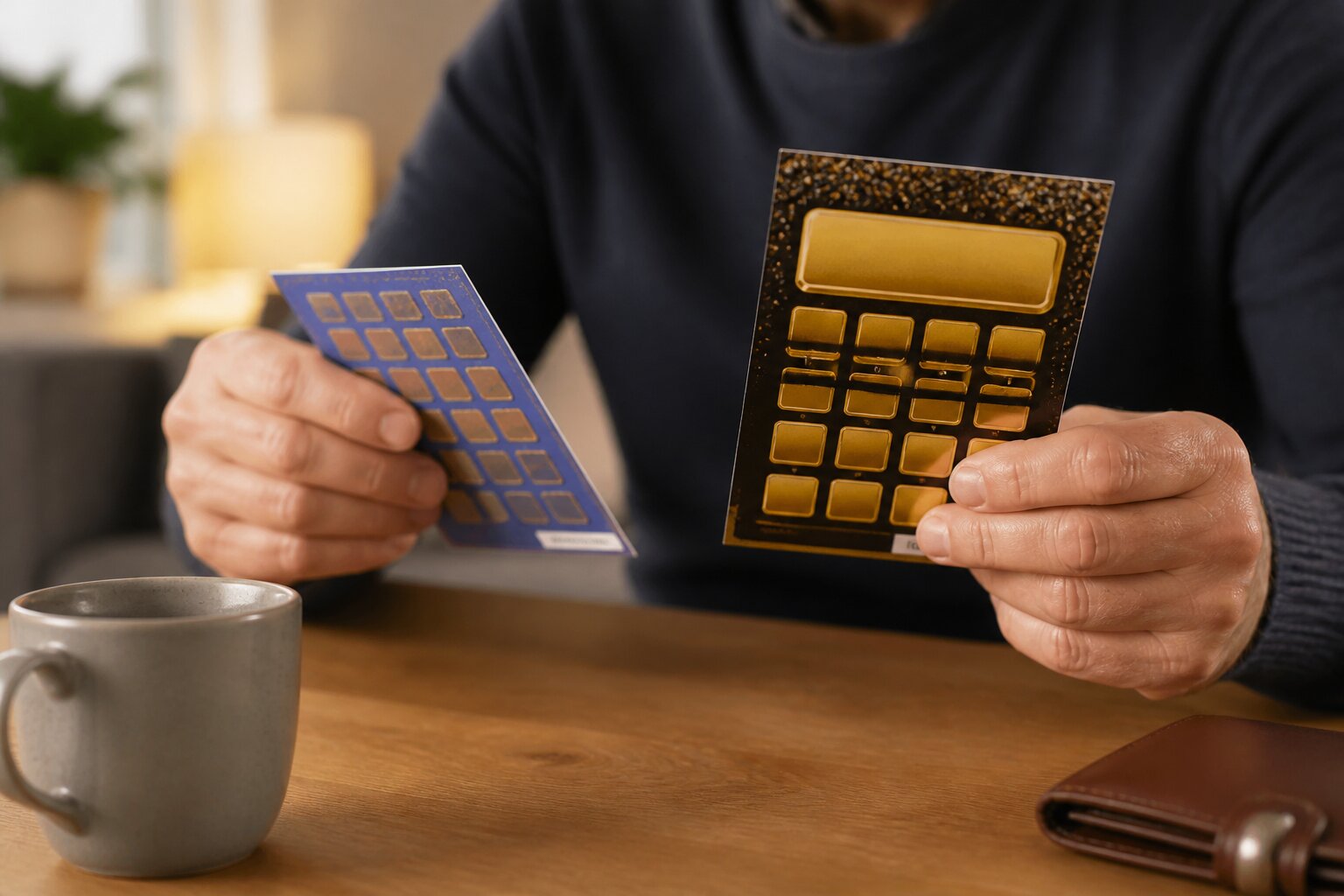
Ever found yourself eyeing up the more expensive scratch cards at your local shop, wondering if the bigger price tag means a better shot at a win? With options ranging from just £1 to sometimes £10 or more, choosing the right card can feel like a decision that deserves a bit of unpacking.
You may have heard that pricier cards come with bigger jackpots or more favourable odds, but is that accurate or simply marketing? Before you decide to spend more, here’s what really matters.
Curious? Read on to find out how price, prize structure and game design affect your chances — and what to keep in mind when choosing a card.
What Determines The Odds Of Winning On Scratch Cards?
Odds for scratch cards are set during the game’s design. Before a single card reaches a store, game designers decide how many prizes of each size will exist and how those prizes will be distributed across the total number of tickets. Those choices determine the statistical chance of winning any prize, as well as the frequency of different prize levels.
The prize pool is central to this process. It is the total money allocated to all prizes for that game and dictates how many large, medium and small prizes are available. Payout structure also matters: some games prioritise more frequent smaller wins, while others concentrate value into fewer, larger prizes.
Price often reflects how the prize pool is divided. A higher-ticket game can support a very large top prize because more money per ticket can be channelled into that jackpot. That said, the presence of a large top prize does not change the mathematical odds of winning it; those odds depend on how many such prizes are issued relative to the total tickets printed. This distinction between prize size and prize probability is important when comparing different card prices. The next section looks at how those design choices translate into real differences between cheaper and pricier cards.
Are Expensive Scratch Cards Different From Cheaper Ones?
At a glance, expensive and cheaper cards look different because of their prize offers and how they talk to players. More expensive cards commonly advertise bigger top prizes and higher-value mid-tier wins. For example, a higher-priced ticket might promise millions as its top prize, while a low-cost card will usually set a far smaller top amount.
Print runs provide another contrast. Some high-value games are produced in smaller quantities so the few very large prizes sit among fewer tickets. Lower-priced games are often printed in larger volumes and spread their prize money across more frequent, smaller wins. Return to player, or payout percentage, can vary too; some higher-priced games allocate a slightly greater proportion of sales back to prizes over the long run, but this does not automatically equate to better short-term chances for any individual ticket.
Understanding these differences helps you match the product to your expectations. If a large top prize is what appeals, a pricier ticket will offer that possibility; if regular small wins are preferable, lower-priced games sometimes deliver more frequent payouts. Next, we’ll explain the mechanics behind the odds so you can see how those contrasts are calculated.
How Do Scratch Card Odds Work?
Odds are calculated by comparing the number of winning tickets at each prize level with the total number of tickets produced for the game. For instance, if a game prints 1 million tickets and there are 100,000 prizes of various sizes, the overall odds of winning any prize would be 1 in 10. Individual prize-level odds are shown separately so players can see how rare the top prizes are compared with smaller ones.
Regulation ensures transparency. All games sold in the UK are subject to regulatory oversight, which requires clear disclosure of odds and that games operate fairly. The odds printed on the ticket or published online reflect the game as it was designed and are not changed by where a ticket is bought.
Each ticket’s chance does not depend on previous outcomes or what other players experience; every card’s probability is determined by that game’s fixed prize distribution. With the calculation explained, the next section explores whether higher-priced tickets actually come with noticeably better prizes and how that affects what you might experience.
Do More Expensive Scratch Cards Offer Better Prizes?
Costlier scratch cards tend to offer larger headline prizes and higher-value individual awards. That is the obvious appeal: the chance to win a life-changing sum sits more commonly on pricier tickets because a greater share of each sale can be allocated to big payouts.
But big prizes are rarer. A game can promise a multi-million-pound top prize while still having extremely long odds for that prize because only a very small number of those awards exist. Conversely, cheaper cards may give more frequent smaller wins because their prize pools are split across many tickets rather than concentrated into a few huge amounts.
It is also worth noting how prize distribution shapes player experience. A ticket that returns smaller wins more often will create frequent moments of reward, while a high-value game emphasises the distant possibility of a large payoff. That contrast affects how players perceive value, even when the underlying probabilities remain straightforward. With this in mind, the next section addresses some of the common misunderstandings people have about expensive scratch cards.
Common Myths About Expensive Scratch Cards
Several persistent misconceptions distort how people view scratch card value. One is the belief that paying more guarantees better odds. In reality, price does not inherently change the statistical chance of winning a given prize; it more directly influences the size and distribution of prizes available in that game.
Another myth is that certain stores or times yield more winners. Distribution is handled so that tickets are mixed across outlets, so any apparent clustering of wins is a matter of distribution and reporting, not a reflection of better odds in particular places. Some players also believe outcomes follow patterns such that wins are due after a run of losses; however, every card’s chance is based on its game’s printed prize allocation and is independent of other tickets.
These fallacies can encourage spending based on expectation rather than design. Knowing how odds and prize structures really work helps set realistic expectations and keeps the focus on the entertainment value of play. The next section outlines practical considerations to bear in mind before you decide to buy higher-priced tickets.
What Should You Consider Before Buying Expensive Scratch Cards?
Budgeting is the main practical consideration. Treat scratch cards as occasional entertainment and choose an amount that fits comfortably within personal finances. Thinking about what you want from the experience helps too: whether it is the thrill of chasing a large top prize or the satisfaction of more frequent small returns will guide whether a pricier or cheaper game suits you.
Age and legal requirements matter: only those who meet the minimum age may buy or play scratch cards. Tools exist to help manage play, including spending limits and exclusion options, which are there for anyone who wants to control their activity.
Balancing the size of the potential prize against how quickly losses can add up gives a clearer sense of cost versus reward. With those factors considered, you can make an informed choice about whether an expensive ticket is the right option for the experience you want. The final section wraps up what this means in practice.
Conclusion: Is Paying More Worthwhile?
Paying more for a scratch card buys access to larger headline prizes and a different prize distribution, but it does not change the fundamental odds set by the game’s design. Expensive tickets may offer the excitement of a substantial top prize, while cheaper ones often deliver more regular smaller wins. Neither option promises a better chance of success for any individual ticket.
Decide based on what kind of experience you want and how much you can comfortably spend. Keep expectations realistic, follow legal requirements, and approach scratch cards as entertainment rather than a route to earnings. With a clear budget and an understanding of how odds and prize structures work, you can choose tickets that match your priorities and enjoy the experience responsibly.
**The information provided in this blog is intended for educational purposes and should not be construed as betting advice or a guarantee of success. Always gamble responsibly.