
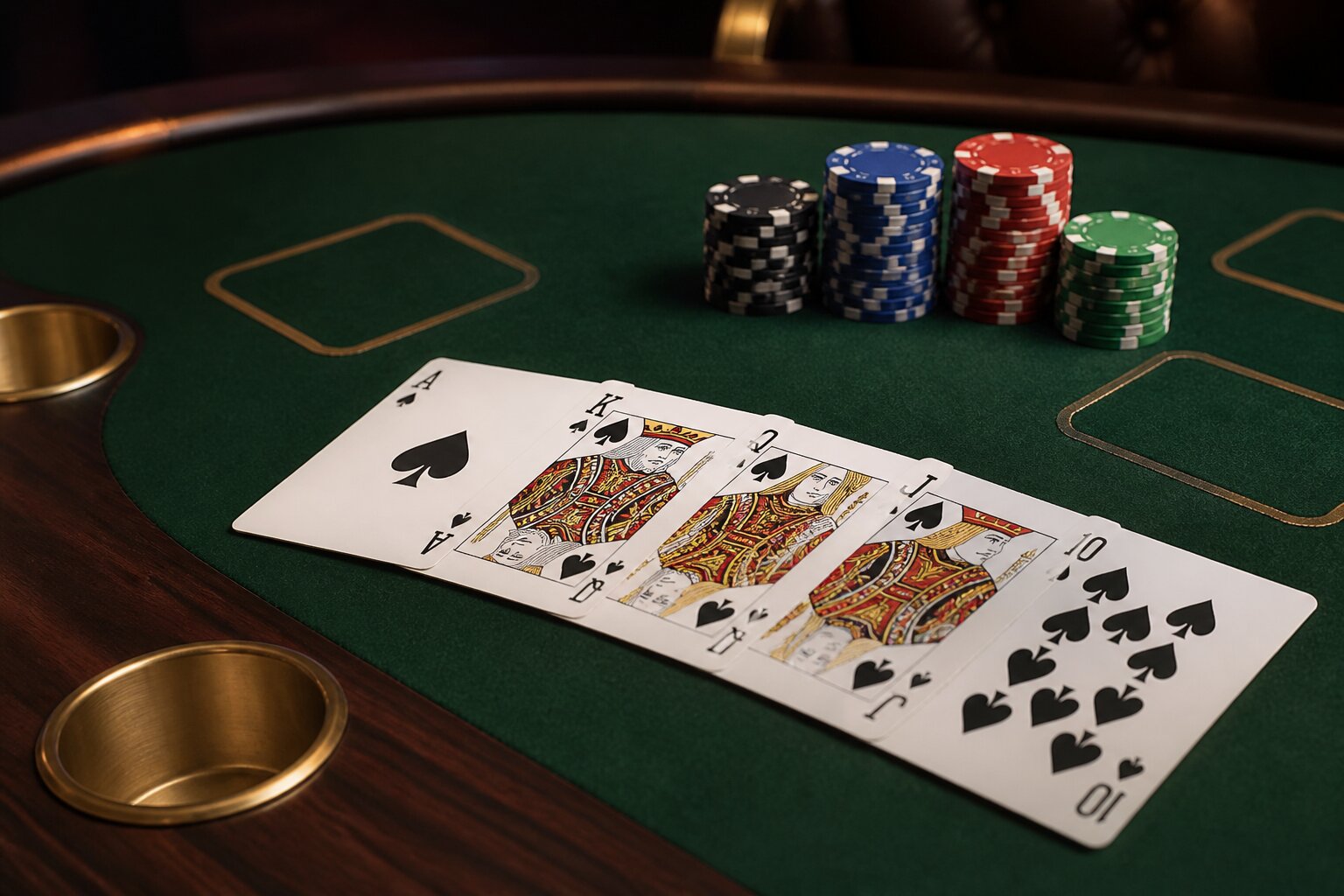
Are you wondering what a straight flush means when playing blackjack? You’re not alone — the term comes from poker and can create confusion when it appears around a blackjack table.
This guide explains what a straight flush means in the context of blackjack, how it appears in side bets, and why it doesn’t change the core game. Read on to get a clear picture of how these combinations fit into play and what to watch for when side bets are offered.
What Is a Straight Flush in Blackjack?
A straight flush in blackjack typically refers to a specific side bet outcome rather than a standard hand ranking. In regular blackjack the objective is to reach a hand value as close to 21 as possible; suits and running sequences are not part of determining the main result.
When a straight flush does appear at the blackjack table, it comes from an optional side bet that looks for cards of the same suit in consecutive order among your initial cards — for example, 7, 8 and 9 of hearts. These side bets use only the first two or three cards dealt and are separate from the main game, so they do not change how the dealer resolves normal hands.
Because the side bet is independent, its rules and payouts vary by table. Some games count only your first two cards and the dealer’s upcard, while others use only your own first three cards. Knowing the exact terms for a given side bet helps avoid surprises when checking the payout table for straight flushes and other poker-style combinations.
Are Straight Flushes Possible in Standard Blackjack?
No — straight flushes do not exist within the rules of standard blackjack. The outcome of the main game depends exclusively on card values adding up to 21 or less; suit and sequence carry no weight in who wins the hand.
If you find a straight flush being paid, it will always be via an optional side bet. Those side bets are additional wagers placed separately from the main stake and do not affect regular decisions such as hitting, standing, doubling or splitting. That separation is important to bear in mind when considering whether to place one of these extra bets.
Understanding that straight flushes are a side-bet feature leads naturally into how blackjack hand rankings actually work, which is where the game’s priorities become clear.
Hand Rankings in Blackjack: How Do They Work?
Blackjack hand rankings are simple and based entirely on the numerical total of cards in a hand. The single most valuable outcome in the main game is a blackjack: an ace paired with any ten-value card. This combination is paid at a premium compared with ordinary winning hands because it beats all other totals except another blackjack.
Below that, hands are ordered by total value — a 20 beats an 18, and so on — and any hand that exceeds 21 is a bust and loses immediately. Ties between player and dealer result in a push, returning the player’s stake. There are no extra tiers or bonus rewards within the main game for matching suits or creating sequences, which is why side-bet markets exist separately to recognise those patterns.
With the primary hand structure clear, it’s easier to compare what a straight flush side bet offers versus the regular blackjack outcome.
How Does a Straight Flush Compare to a Blackjack?
A straight flush side bet and a blackjack serve entirely different purposes at the table. A blackjack resolves the main hand and carries the highest standard payout, while a straight flush is usually an infrequent, higher-paying result within a side-bet market.
Payouts for a blackjack are long-established and typically higher than straightforward wins; side-bet payouts for straight flushes vary more widely and are set by each side-bet table. Because a straight flush requires specific suits and consecutive ranks, it is much rarer than a blackjack and so commands larger payouts when it does occur.
The difference in rarity also affects strategic thinking. The main game rewards decisions that influence hand totals, whereas side bets that pay for poker-style patterns generally have a larger house edge and should be treated as optional entertainment rather than integral strategy. That distinction leads into common misconceptions about straight flushes and other special hands.
Myths About Straight Flushes in Blackjack
Several persistent myths surround straight flushes and their role at the blackjack table. One is the idea that a straight flush is a strong hand within the main game; in blackjack, strength is tied to totals, not suits or runs. Another myth is that achieving a straight flush during normal play will trigger a special payout — it will not, unless a qualifying side bet was placed.
Some players think aiming for these patterns is a sensible way to improve returns. In practice, side bets that reward combinations like straight flushes are separate markets with their own odds and payouts; they do not change how the dealer resolves the main game. Understanding that difference will help manage expectations and keep wagering choices grounded in how the game actually functions.
Knowing where these side-bet options appear and what rules they use makes it easier to decide whether the added wager suits your approach at the table.
Where Can You Play Variants With Straight Flushes?
Variants that recognise straight flushes are most commonly found where optional side bets are offered. Popular examples include 21+3 and Perfect Pairs, where your first two cards — sometimes combined with the dealer’s upcard — can form poker-style hands and trigger payouts. Casinos that offer a broader range of blackjack products are more likely to include these side bets, both on land and online.
Availability will depend on the operator and the specific variant chosen, and the rules for which cards count are shown on the table or in the game interface. Players in the UK must be at least 18 years old to take part in any gambling activity. If a side bet interests you, check the paytable closely so you understand what counts as a straight flush and what payout to expect.
Next, it’s useful to see how venues present and enforce the rules that govern these special outcomes.
House Rules: How Do Casinos Handle Special Hands?
Casinos set clear house rules for side bets so players know exactly which card combinations qualify and how much they pay. These rules are displayed on table layouts or within the digital game menus for online play, specifying whether the side bet uses your first two cards, your first three cards, or includes the dealer’s upcard.
Because side-bet payouts can differ between venues, the table’s paytable is the definitive guide to what a straight flush will receive. Rules also confirm that special hands on side bets do not alter the resolution of the main blackjack hand; a straight flush payout is handled separately from the round’s win, loss or push.
Reading the published rules and payout table before placing any side bet makes the experience clearer and avoids surprises, and that completes the practical picture of how straight flushes fit into blackjack play.
**The information provided in this blog is intended for educational purposes and should not be construed as betting advice or a guarantee of success. Always gamble responsibly.