
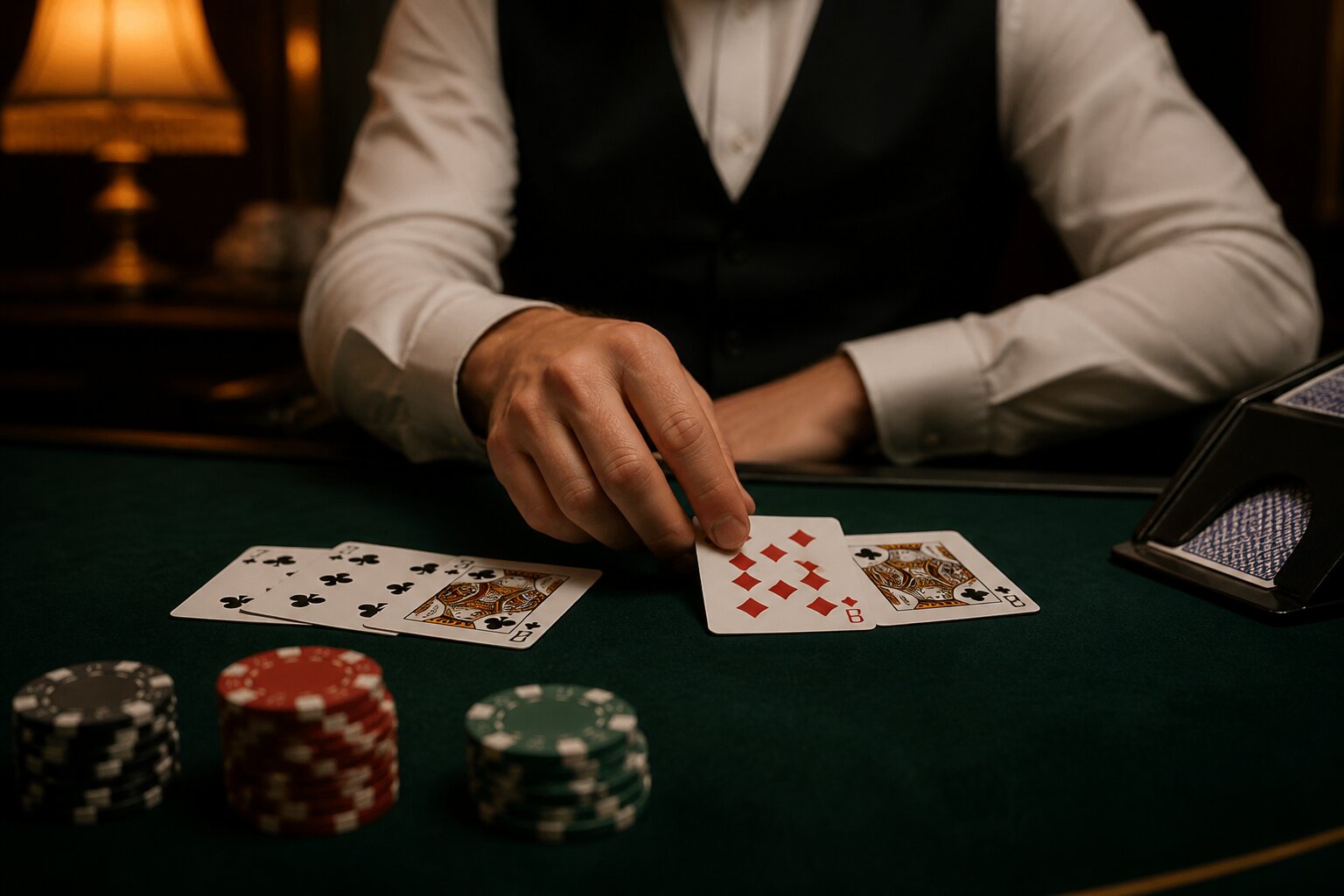
Blackjack is a classic casino favourite, but there’s more to the game than just beating the dealer’s hand. Side bets such as 21+3 add an extra layer of interest by using the first three cards in a round to form poker-style combinations.
You might have come across the term "suited trips" while playing or reading about blackjack. It sounds intriguing, but what does it actually mean, and how does it fit within the 21+3 side bet?
If you want to understand how suited trips are formed, what they pay, and whether the side bet is worth a punt, read on for a clear, practical guide that explains the details you need to know.
Understanding the 21+3 Side Bet in Blackjack
The 21+3 side bet is an optional wager placed alongside the main blackjack stake. It uses just three cards—the player’s first two cards and the dealer’s face-up card—to create simple three-card poker hands. If those three cards form one of the qualifying combinations, the side bet pays out according to a separate pay table; the main blackjack outcome is unaffected.
Common qualifying hands for 21+3 include a flush, straight, three of a kind, straight flush and suited trips. The pay table determines how much each hand returns, and different casinos or tables may use different ratios. Because only the initial three cards matter, the side bet is resolved as soon as those cards are shown, even though the main hand continues.
The essential point to grasp before we look at suited trips specifically is that the side bet treats the three-card set like a mini poker hand — what follows explains exactly how suited trips fit into that system and why they are so uncommon.
How Do Suited Trips Work in the 21+3 Bet?
Suited trips are the specific outcome where the three relevant cards are all the same rank and the same suit. In practical terms, that means your first two cards and the dealer’s upcard must match both in value and suit.
Because a single physical deck contains only one copy of a given rank and suit, suited trips can only occur in multi-deck games where duplicate suit-rank combinations exist across the shoe. For example, in a six-deck shoe it is possible to be dealt the seven of clubs and another seven of clubs because those cards come from different decks within the shoe; if the dealer’s upcard is also the seven of clubs from a third deck, that completes suited trips.
Suited trips are stricter than a simple three of a kind, which requires only matching ranks regardless of suit. They are also rarer than a straight flush or flush in some shoe sizes because the condition demands both identical rank and identical suit across all three cards. Next we will look at how the rarity of suited trips influences payouts.
Payouts for Suited Trips and Other Winning Hands
Payouts for the 21+3 side bet vary by table, but the hierarchy of rewards typically reflects how difficult each three-card hand is to hit. Suited trips occupy the top of that hierarchy and therefore receive the largest payout.
Typical pay table examples include:
- Suited trips: 100 to 1
- Straight flush: 40 to 1
- Three of a kind: 30 to 1
- Straight: 10 to 1
- Flush: 5 to 1
These figures illustrate why suited trips attract attention: a successful suited trips bet multiplies the side stake substantially. Payouts can differ between operators, so it is worth checking the table-specific pay table when you sit down. Having seen how much suited trips can return, the next section puts those rewards into sharper statistical context.
How Rare Are Suited Trips in Blackjack?
Suited trips are extremely rare. In multi-deck shoes commonly used in casinos, the probability of seeing a particular rank-and-suit appear on both of your first two cards and the dealer’s upcard is very low. For example, in a typical six-deck game the chance of suited trips works out to only a few hundredths of a percent — roughly 0.018% or about 1 in 5,400 hands — though exact figures change with the number of decks.
By comparison, more common three-card outcomes like a flush occur far more often; a flush can appear around once every 32 hands in typical conditions. The difference in frequency explains why suited trips pay so much more. Knowing these relative rates helps set realistic expectations about how often the pay table’s top prize will be seen.
With those probabilities in mind, the final section considers whether taking the 21+3 side bet is a sensible choice for a player’s overall session.
Are 21+3 Side Bets Worth Playing?
Whether the 21+3 side bet is worth playing depends on what a player wants from the game. The side bet provides an extra chance at a large payout without affecting the main blackjack decision-making, which some players find entertaining. Mathematically, however, the side bet typically offers a lower return to player (RTP) than regular blackjack; many versions sit in the low to mid 90s percent range, compared with commonly higher RTPs for the main game.
That difference means side bets are generally less favourable for long-term returns. Players who include 21+3 in their play often treat it as occasional entertainment rather than a core strategy. If choosing to bet, keeping the side bet stake modest relative to the main wager helps preserve bankroll longevity while still allowing for the occasional payout.
Play with limits in mind and view side bets as an optional extra; this keeps the focus on enjoying the game while managing risk. With that perspective, suited trips and the 21+3 bet can add a memorable twist to a blackjack session without dominating how the rest of the game is approached.
Enjoy Casino Games at Free Spins No Deposit Casino
We're always pleased to welcome new players to our site, where you can relax and enjoy a friendly atmosphere as you explore our casino games at your own pace.
Getting set up takes just a few easy steps – create your account, make a deposit, and you’ll be ready to play. We look forward to having you with us and hope you enjoy your experience.
**The information provided in this blog is intended for educational purposes and should not be construed as betting advice or a guarantee of success. Always gamble responsibly.