
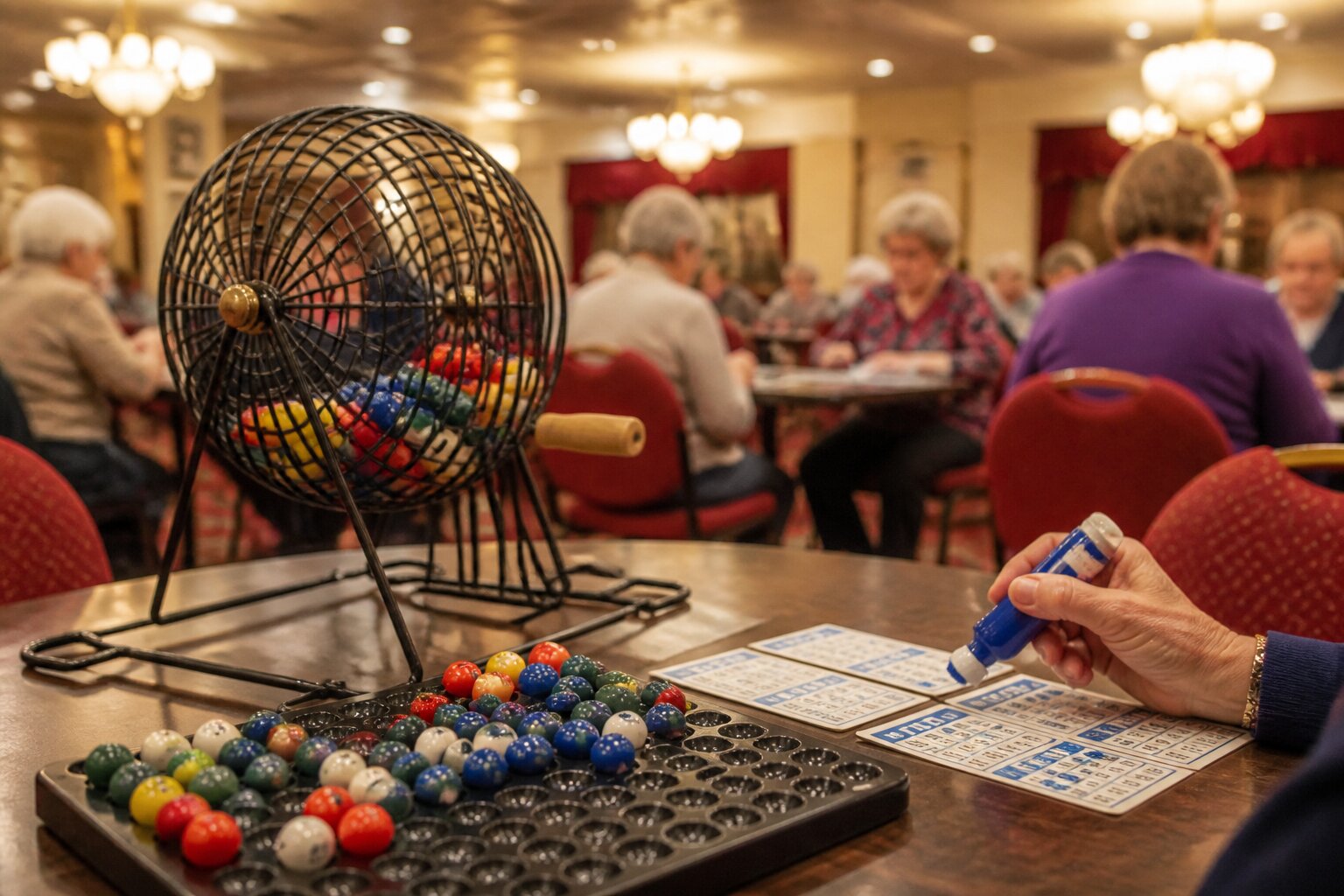
Ever wondered what makes bingo tournaments so exciting? With players joining from different places and prizes to win, tournaments add a competitive edge to the familiar game.
If the word “tournament” sounds daunting, this guide breaks the format down into straightforward explanations and everyday examples. Read on and you’ll know what to expect and how tournaments are organised.
What Is a Bingo Tournament?
A bingo tournament is a timed event where players compete across a series of games, collecting points or wins to climb a leaderboard. Unlike casual sessions that might run whenever a hall or site is open, a tournament has a defined start and finish, with a shared prize structure for top performers.
Players usually enter with a pre-arranged ticket package or buy a set number of tickets at the venue. Everyone plays the same games, so results are comparable and the leaderboard reflects performance across the whole session. Prizes are commonly divided among the top scorers rather than awarded to a single winner, which keeps many players engaged until the end.
A clear understanding of the tournament format makes it easier to follow the next section on how events are put together.
How Is a Bingo Tournament Structured?
Tournaments begin with a published schedule and an entry process. Registration may require buying specific tickets or a tournament pass; organisers state the cost and ticket quantity so players can decide whether to join. Once the event starts, games are played consecutively within the set session.
Each round awards points or credit for particular achievements—first line, two lines, full house or special patterns—depending on the rules. A scoreboard or digital leaderboard is updated as rounds progress so players can see their position. Some events include bonus rounds or special prizes that offer extra points or separate rewards.
At the end of the session the organiser totals scores and distributes prizes according to the published prize table. Tournaments operate under licensing and player protection rules, with mechanisms in place to manage disputes and technical issues. What follows next is a closer look at the specific rules that keep play fair and transparent.
Common Rules in Bingo Tournaments
Rules are set out in advance to ensure a fair competition and protect everyone taking part. Core requirements typically cover ticket equality, time limits, age verification and conduct around ties or technical interruptions.
A standard measure to keep things even is to require each entrant to use the same number of tickets or a fixed ticket package so that no one gains an advantage simply by buying more. Events also run to fixed start and end times, and late entries are not usually permitted once a session is underway.
Only adults may take part, with verification where necessary, and organisers publish how tiebreakers will be handled—whether by splitting prizes, applying a secondary criterion such as fastest full house, or using another predefined method. Rules also explain what happens if a game is affected by a technical fault, and how disputes are resolved. Responsible play measures, such as deposit or session limits and clear information about entry costs, are made available so participants can manage their involvement comfortably.
These rules set the scene for the different tournament formats you might encounter.
Types of Bingo Tournament Formats
Tournaments vary by venue and prize structure, and each format gives the event its own pace and atmosphere. The three common types are classic room tournaments, online tournaments and progressive jackpot competitions, each with distinct characteristics and examples of how they run. Knowing the differences can help players choose events that suit their style and expectations.
Classic Room Tournaments
Classic room tournaments take place in physical halls or clubs where players gather at scheduled times. Tickets are bought on site, and rounds are played in sequence while scores are tracked live by the organisers.
The social element is a major draw: players often chat between rounds and can immediately see results and reactions. Prizes are awarded at the close of the session, often to the top few players, which keeps the atmosphere competitive and social. Organisers may also run occasional theme nights or special events that alter the usual pace or prize distribution.
Online Bingo Tournaments
Online tournaments allow players to join from different locations while the site handles entry, ticket use and leaderboard updates automatically. Games run in quick succession, and the platform records points and announces winners when the event finishes.
This format makes it easy to offer frequent tournaments that attract many participants. Additional features such as chat functions, automated reminders and varied game formats are often included to enhance the experience, while results and statistics can be reviewed after the event ends.
Progressive Jackpot Tournaments
Progressive jackpot tournaments add a pooled prize that grows each time it is not won. A portion of entries feeds the jackpot, which is paid out when a specific achievement occurs, such as a full house within a capped number of calls.
If the condition is not met, the jackpot rolls over to the next event, creating a larger prize pot over time while smaller prizes can still be awarded for regular wins. These tournaments can build excitement because the potential payout increases, and organisers normally publish the current jackpot total so players know what is at stake.
Understanding these formats helps when comparing how winners are decided and what to expect from scoring and prizes. Choosing the right format can make the experience more enjoyable depending on whether a player prefers social interaction, convenience, or the chance of a growing jackpot.
How Are Winners Determined in Bingo Tournaments?
Winners are identified by the total points or number of wins they accumulate across the tournament’s games. Each round can award points for particular outcomes—first line, additional lines, full house or special patterns—and the leaderboard reflects these totals as play continues.
At the close of the session the scores are finalised and prizes go to the highest scorers. Events may reward several top positions rather than a single winner, and published rules explain whether prizes are fixed amounts or share a pooled fund. In the case of a tie, the tournament’s tiebreaker method comes into play: this might be prize splitting, a speed-based measure, or another pre-stated approach.
All scoring and payout methods are carried out according to the tournament rules and oversight requirements so results are transparent and verifiable. The practical effect of these rules is best seen in real examples, which follow next.
Simple Examples: How a Bingo Tournament Works
Examples make the structure and scoring easier to picture. Below are two real-world scenarios showing typical entry fees, scoring systems and prize distribution so you can see how a session unfolds.
Example 1: Traditional In-Person Bingo Tournament
A community club advertises a Friday Night Tournament with a £5 entry fee. Twenty players each buy the same ticket package at the door and the event runs for eight rounds. Winning a line earns 1 point and a full house is worth 3 points. Scores are tracked by the organisers during play and added up at the end.
After eight rounds the highest scorer takes the top prize—say £50—while second and third receive smaller cash awards. If two players finish level on points, the published tiebreak rule determines whether the prize is shared or decided by an additional criterion.
Example 2: Online Bingo Tournament Scenario
An online platform runs a Sunday Leaderboard Tournament requiring a £10 ticket bundle. Fifty players take part and the event consists of ten back-to-back games. The site awards 2 points for a line and 5 points for a full house, updating a live leaderboard as the session progresses. At the end the player with the highest points wins the top cash prize, with several other players picking up smaller rewards. The platform’s rules explain how ties and any technical problems are handled.
These examples show how structure, scoring and prize distribution work together; the next section offers practical tips to make participation straightforward and enjoyable.
Tips for Participating in a Bingo Tournament
Before entering, read the tournament rules and prize table so you know precisely how scoring and payouts work. That helps avoid surprises and shows what’s needed to qualify for particular prizes.
Decide on a spending limit in advance and stick to it, choosing entry options that fit your budget. Make practical preparations too: if you’re attending in person allow time to register, and if you’re playing online check your connection and device to reduce the chance of interruptions.
If tools are available to help manage play, such as deposit or session reminders, use them to keep your involvement within comfortable limits. These simple steps help ensure a focused, enjoyable experience from registration through to the final leaderboard.
You’ll now have a clear picture of how bingo tournaments are run, how winners are found and what to consider when joining one, so you can take part with confidence.
Enjoy Slots at Free Spins No Deposit Casino
We’d love to welcome you to our friendly community of players at Free Spins No Deposit Casino, where you can enjoy an entertaining and relaxed experience in a safe environment. There’s always a place here for those who want to explore a world of online casino excitement.
Getting involved is straightforward – just set up your account, make a deposit and see what you can discover. We’re looking forward to having you with us.
**The information provided in this blog is intended for educational purposes and should not be construed as betting advice or a guarantee of success. Always gamble responsibly.